

Are you looking for ways to cultivate more joy in the classroom and inspire your students to bring more joyful habits into their lives? Look no further! In this blog post, I share with you 10 easy and practical strategies to cultivate joy in the classroom. They have been encouraged by a recent read of mine,The Book of Joy by the Dalai Lama, Desmond Tutu and Douglas Abrams.

So why is it important to infuse joyfulness into your classroom? As teachers, we are seeing more anxious and fearful children. Perhaps a lingering effect of the pandemic. We know that a positive and happy learning environment has a powerful impact on student engagement and enthusiasm.
Don’t you want more of that in your classroom? Don’t you want to create a joyful space for your students where it is an oasis from an otherwise chaotic world?
Before we dive in and discover how you can cultivate joy in your classroom and inspire your students, I wanted to make sure you’ve downloaded my Kindness Freebie. Click on the link below to grab this kindness activity that you can use with your preschool and kindergarten students today!

The importance of cultivating joy in the classroom
Creating a joyful classroom environment is more than just making students happy; it has a profound impact on their overall well-being. When students feel joy and happiness in the classroom, they are more motivated, engaged, and willing to take risks in their learning.
A joyful classroom also creates a safe and supportive space where students feel comfortable expressing their thoughts, ideas, and creativity. This positive environment fosters collaboration, problem-solving skills, and a growth mindset among students.
A joyful classroom also promotes positive behavior and reduces behavioral issues. When students feel connected, valued, and supported, they are less likely to engage in disruptive behavior.
Lastly, a joyful classroom helps build that sense of belonging in the classroom. It helps build trust and opens communications lines with students.
10 easy strategies to cultivate joy in the classroom and inspire your students:
1. Create a positive classroom culture
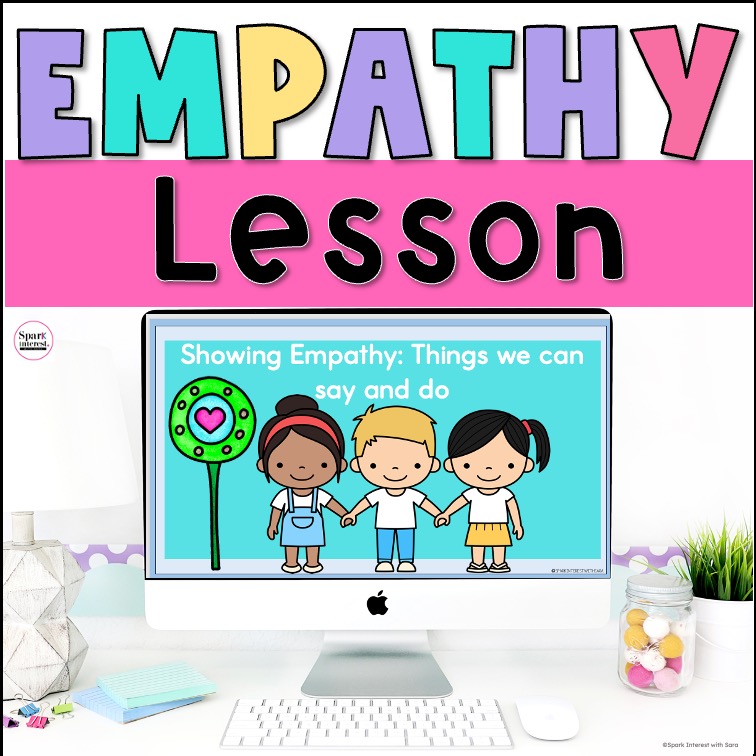
Creating a positive classroom culture is essential for cultivating joy and inspiring students. A positive classroom culture is characterized by respect, kindness, inclusivity, and a sense of belonging. Here are some strategies to create a positive classroom culture:
- Promote kindness and respect: Teach students the importance of kindness, empathy, and respect towards each other. Encourage positive communication, active listening, and teamwork among your students.
- Foster a sense of belonging: Create a classroom environment where every student feels valued, included, and celebrated. Encourage students to share their unique backgrounds, experiences, and perspectives.
Practical ideas to support this:
- Read books on kindness, empathy, friendship and respect. Spend time talking about the characters, what they notice and consider how others might be feeling.
- Explicitly teach what kindness/ empathy and respect means, how to show kindness/ empathy and respect to others and what it looks like in the classroom.
- Make developing relationships and building that sense of community the most important thing to do at the beginning of the school year!
- Include families as much as you can. Share what is happening in the classroom and invite families to contribute to the curriculum.
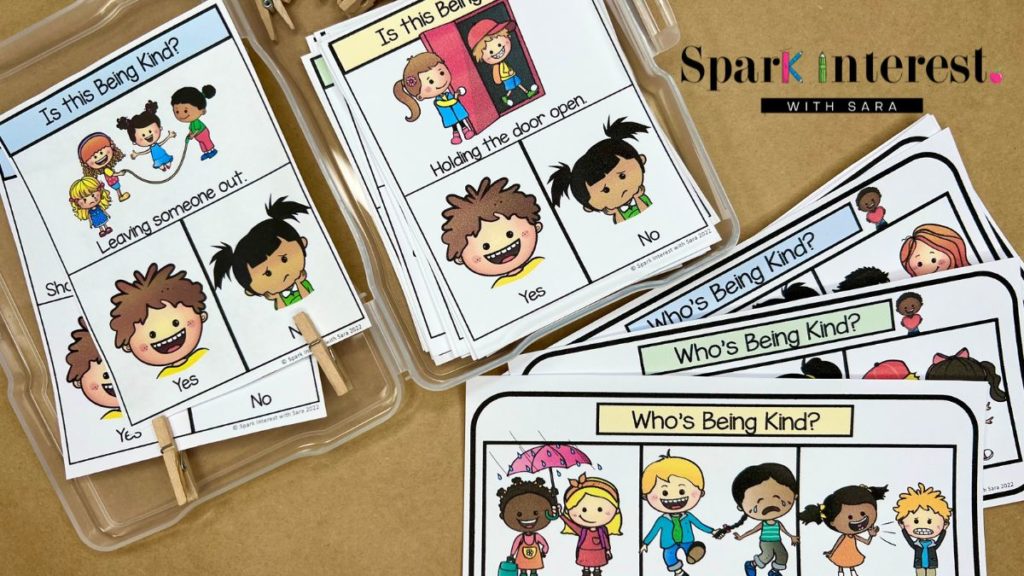
2. Incorporate play, movement and music into your day
Incorporating play and creativity into your day can significantly enhance student engagement and foster joy in the classroom. When students are given the opportunity to explore, experiment, and create, they become active participants in their learning. Here are some ways to incorporate play and creativity into your day:
- Use games and hands-on activities: Our preschoolers love games and hands-on activities, so make sure to include as much fun into your teaching as possible. Games like bingo, simple board games, charades, Would You Rather and Pairs are just a few ways to bring games into your classroom. This makes learning more enjoyable and helps reinforce key concepts.
- Encourage imaginative thinking: Provide open-ended resources and questions that encourage your preschoolers to think creatively and outside the box. Encourage them to come up with their own ideas, theories and solutions.
- Integrate music, dance and craft: Incorporate art, music, drama, and other forms of creative expression into your day. We should encourage our students to move their bodies in ways that bring joy, energy, playfulness, or other emotions as much as possible. Why not have dance or movement breaks in your day? Create a joyful playlist with your students and include songs they love to sing and dance to. Who doesn’t love a dance break?
3. Practice gratitude and mindfulness in the classroom
Practicing gratitude and mindfulness in the classroom can have a profound impact on student well-being and create a positive learning environment. Gratitude encourages students to focus on the positive aspects of their lives, fostering a sense of happiness and contentment.
Mindfulness, on the other hand, helps students develop self-awareness, emotional regulation, and resilience. Here are some ways to practice gratitude and mindfulness in the classroom:
- Start the day or end your day with a gratitude exercise: Begin each day or end each day by asking students to share something they are grateful for. This sets a positive tone for the day and helps students develop a gratitude mindset.
- Introduce mindfulness exercises: Incorporate mindfulness activities such as deep breathing exercises, guided meditation, or mindful coloring and worksheets into your daily routine. Mindfulness practices allow for individual nervous system regulation and co-regulation as a group.
- Encourage students to seek calm when needed with a calm down space in your room. Fill it with mindfulness activities, soft furnishings, calming music, sensory objects and visual aids. For more ideas on setting up a calming area, check out this blog post.
By practicing gratitude and mindfulness in the classroom, you create a positive and calm learning environment where students feel valued, centered, and ready to learn.
4. Create opportunities for student-student connection and collaboration
Being with others and feeling connected to others generates joy. Make sure to create and design opportunities for genuine connection and collaboration in your day.
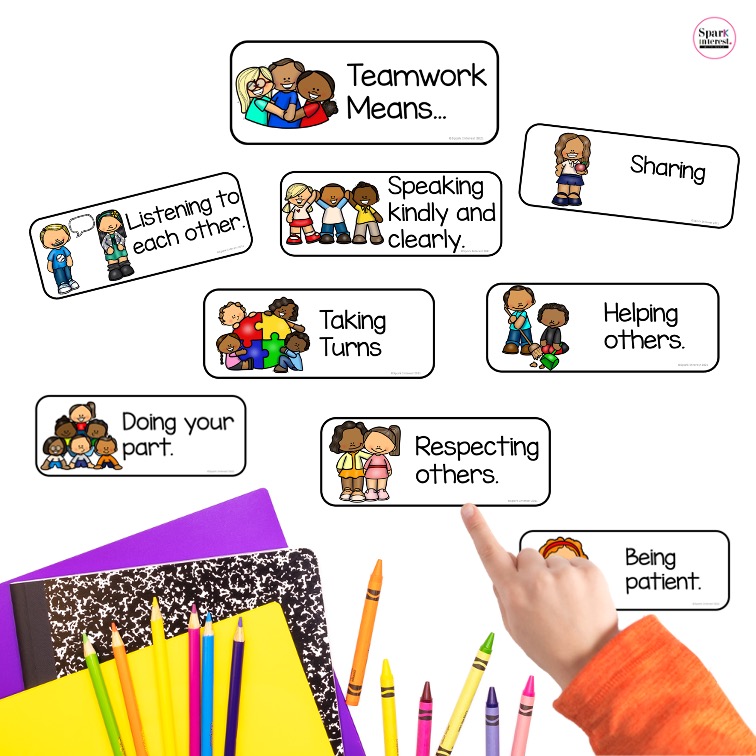
- Include friendship building activities for your students to connect and practice those all important friendship skills. Play games like Paired-Scavenger Hunt or Who’s Under the Blanket, make friendship bracelets for each other or have large collaborative art projects in your classroom.
- Connect during morning meetings or circle time with a song, a special greeting or a question of the day that encourages connection.
- Teach Teamwork and what it means to be part of a team and the skills needed to be part of a team.
5. Collaborating with colleagues to create a joyful learning community
Collaborating with colleagues is essential for creating a joyful learning community. By working together and sharing ideas, resources, and strategies, you can create a supportive and inspiring environment for yourself and your students. Here are some ways to collaborate with colleagues to create a joyful learning community:
- Participate in professional development: Attend workshops, conferences, or professional development sessions with your fellow teachers. This allows you to learn from each other, share best practices, and stay updated on the latest educational trends.
- Share resources and lesson plans: Collaborate with your teacher buddies by sharing resources, lesson plans, and teaching strategies. This promotes creativity, collaboration, and a sense of community.
- Plan joint projects or activities: Collaborate with your teacher buddies to plan joint projects, activities, or events that involve multiple classrooms. This creates a sense of unity and excitement among students (and teachers ????).
By collaborating with your teacher buddies, you create a joyful learning community where teachers support and inspire each other, this leads to more engagement and joy for all.
6. Building strong teacher-student relationships
Building strong teacher-student relationships is crucial for cultivating joy and inspiring students. When students feel a strong connection with their teachers, they are more likely to feel supported, motivated, and engaged in their learning. Here are some strategies to build strong teacher-student relationships:
- Greet each student by name everyday. Enquire about their day or weekend or a sporting activity you know they like. This shows your students you see them as individuals and care about what’s happening in their lives.
- Get to know your students: Take the time to learn about your students’ interests, strengths, and challenges. Show genuine interest in their lives and make an effort to connect with each student individually.Include getting-to-know-you activities at the beginning of the school year to learn more about your students and begin to build that connection.
By building strong teacher-student relationships, you create a supportive and nurturing learning environment where students feel valued, understood, and motivated.

7. Celebrate your students
Celebrate your students for who they are and what they bring into your classroom family. Be interested in their heritage, their families and their interests.
- Highlight anything special you notice. Perhaps they have been a super friend that day or maybe they participated in a JuJitsu competition over the weekend.
- Let their families know at the end of the day or by sending a note home to celebrate something about your students’ day.
- Is it their birthday? Is it a special holiday for their culture? Remembering and honoring those moments will bring much joy to your students.
8. Engage in authentic, student-led curriculum – meaningful work
Learning activities that are centered around your student’s interests will naturally engage them at a deeper level. This meaningful learning, based on their curiosities and their interests will lead to more joy in your classroom.
I remember one year, our investigation into cicadas began with the students finding their empty shells in the playground. This student led investigation and exploration was one of the most rich and joyful experiences for us that year!
9. Take your learning outside – connect with nature
Taking your learning outside and connecting with nature is such a great way to bring instant joy to your student’s day.
- Share a picture book outdoors.
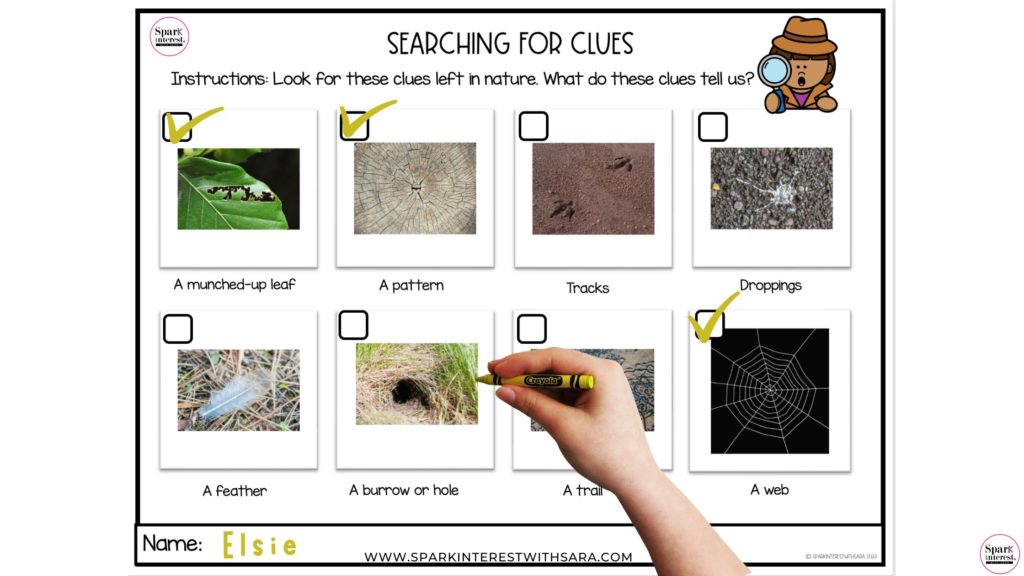
- Go on a nature scavenger hunt.
- Look for bugs and photograph them.
- Create nature rubbings using crayons and paper.
- Play in a mud kitchen.
10. Give back and help others
As the Dalai Lama put it, “In fact, taking care of others, helping others, ultimately is the way to discover your own joy and to have a happy life.”
Dalai Lama, The Book of Joy: Lasting Happiness in a Changing World
- Giving back to others can begin with how we treat our friends and family. Our students can learn that by listening to our friends, by having empathy and being kind is a way we can all give back to each other.
- Looking at our school community and how we can give back is the next step. We can give back to our school community by respecting our resources, our spaces and showing appreciation for the people who help us at school.
- Finally, looking at the wider community and how we may help others in need in our community. Does the local animal shelter need blankets for the winter or has flooding affected a neighboring community?

Cultivate and Spread joy in the classroom
By cultivating joy in our classroom, we are not only teaching our students how to live joyfully, we are also filling our own cup as well. By creating a joyful learning environment, we will equip our students with the skills and mindset to make a positive impact in their school, their homes and their communities.
I hope this list of 10 ways to cultivate joy in your classroom allows you to see how easily it can be to create a more joyful classroom community and inspires you to infuse more joy into your day!
Interested in reading more about building a heart centered classroom community? Check these blog posts out:
Creating a Positive Learning Environment: What does SEL look like in the Classroom?
7 Practical Tips for Building a Supportive Classroom Community in Early Childhood
How to Effectively Support Social Emotional Development in Preschool

