If you’ve ever watched a broken pencil or the wrong coloured cup turn into full tears, you already know why Size of the Problem is such an important skill to teach.
In a Preschool classroom, small frustrations can feel very big in the moment. Someone takes the doll they wanted. A block tower falls over. A child gets bumped in line. Suddenly, what seems minor to us can feel enormous to them.
That’s exactly why teaching Size of the Problem is so helpful in the early years.
This is one of those social-emotional skills that can make such a difference in the classroom. It helps children begin to sort out what happened, how serious it really is, and what kind of response might match the situation.
Because let’s be real, our young learners are still learning all of this. They are learning perspective, problem-solving, emotional regulation, and how to handle those everyday moments that feel very big in the moment.
If you’re looking for playful, hands-on ways to teach this skill, here are some of my favourite big problem little problem activities for Preschool.
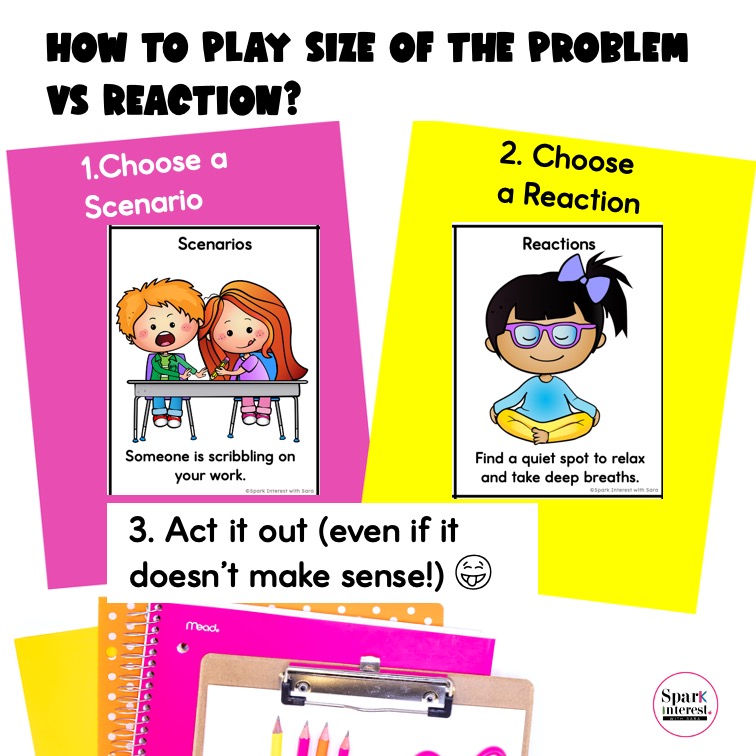
Before we jump in, you can also grab my free Size of the Problem vs Reaction Game. It’s a fun way to help children explore the idea that not every problem needs the same sized reaction.
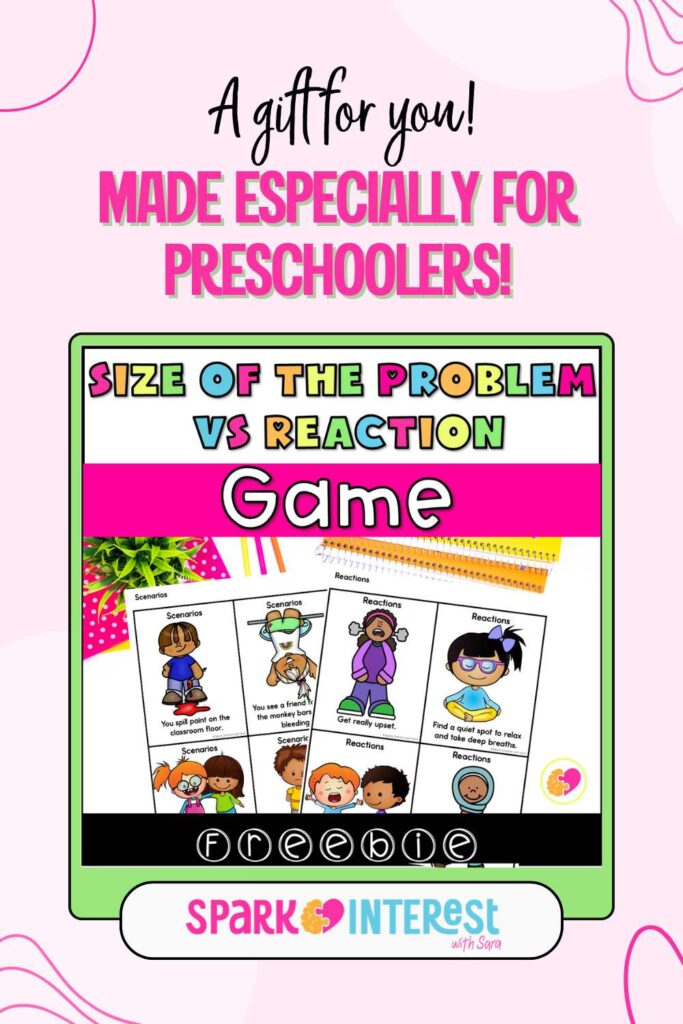
Click on the image to grab it today!
The importance of teaching preschoolers about problem solving
Teaching preschoolers about problem-solving is crucial for their overall development. It helps them develop critical thinking skills, resilience, and the ability to handle challenges effectively.
Understanding how to assess the size of a problem is a fundamental part of problem-solving. By teaching students how to differentiate between small and big problems, it helps them gain a better understanding of what the problem is. It also, gives them the language they need to describe it and helps them regulate their emotions accordingly.
Understanding the concept of size of the problem
To effectively teach children about problem size, it is important to provide them with a clear definition of what constitutes a small problem versus a big problem.
A small problem is typically something that isn’t considered a big deal. The child may solve it on their own or it may solve itself soon enough. Typically they don’t need help. It may include a broken pencil, a caterpillar on a lunchbox or not getting to go first in a game.
A medium size problem would be something that may require asking for support or advice because a child isn’t sure what to do. They may be able to then try and solve the problem themselves or may need your support. This may include a child feeling lonely at lunch time and not knowing who to play with.
Lastly, a big problem is more complex, requiring assistance from others. This could have a significant impact on a child’s well-being or the well-being of others. Examples of big problems for a child may include being repeatedly called hurtful names by another child, a child physically hurting another or a major accident like breaking an arm.
By explaining the distinction between small and big problems, children can begin to grasp the concept that not all problems are the same. They will begin to see different reactions and what we can do to try to solve them will differ accordingly.
Strategies for explaining the size of the problem to Preschoolers
When explaining the size of the problem to preschoolers, it is essential to use age-appropriate language. You should also use examples that they can relate to. One great strategy is to use visual aids and demonstrations that illustrate the difference between small and big problems.
Visual aids can include pictures or drawings that depict different scenarios. For example, you can show a picture of a messy desk to represent a small problem. Or a fire in the classroom to represent a big problem. By visually representing the size of the problem, children can better understand the concept and apply it to real-life situations.
Another strategy is to incorporate real-life examples that children can relate to. For instance, you can discuss a situation where a child forgets to bring their lunch to school. This can be categorized as a small problem as it can be easily resolved by asking a teacher.
On the other hand, a big problem could be losing a beloved pet. This would requires emotional support and may take time to overcome. By relating problems to their own experiences, children can better grasp the concept of problem size.
Using Size of the problem visuals
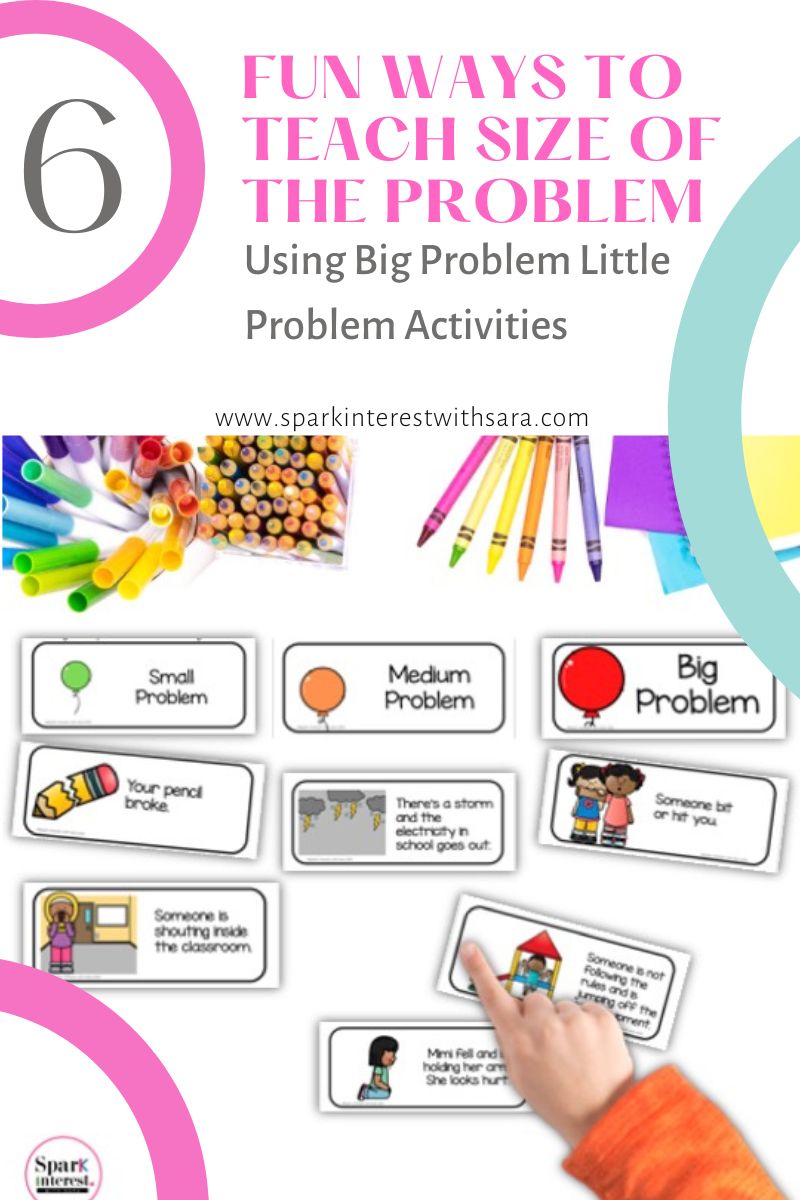
Visual aids and demonstrations play a crucial role in helping children understand the size of a problem. One effective visual aid is a problem-solving chart or scale that categorizes problems based on their size. This chart can have categories such as “small,” “medium,” and “big,” with corresponding examples for each category.
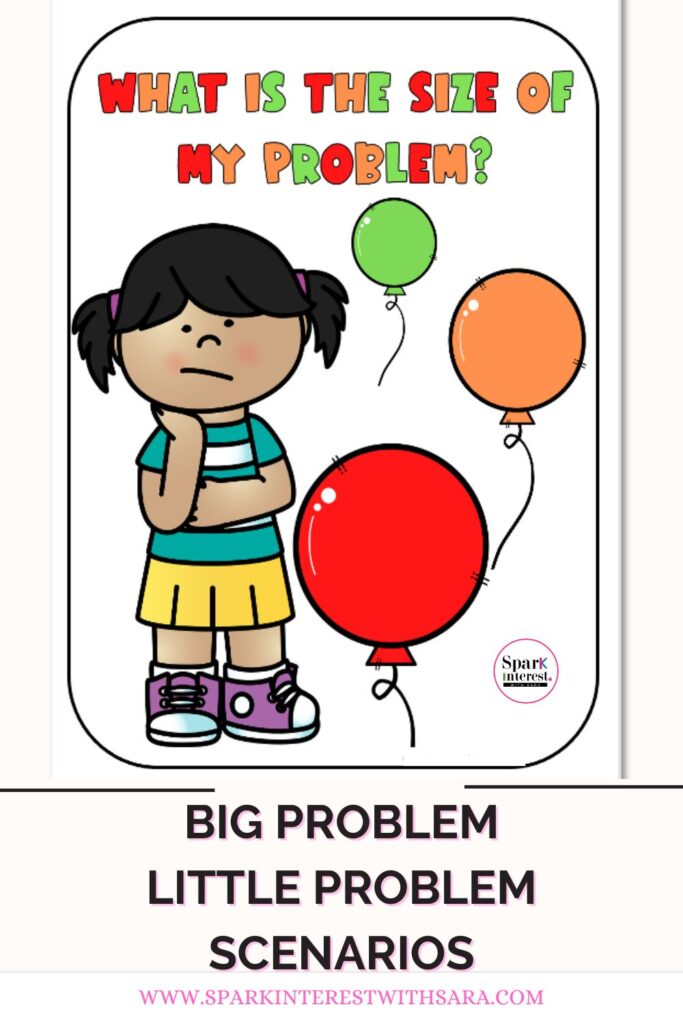
For younger children, a simple image of a small balloon, a medium size balloon and a large balloon can give your students a visual representation of the scale. Then using big problem vs little problem scenarios, the students can sort the different scenarios into what size the problem is.
This interactive big problem little problem activity helps children actively engage with the concept of problem size, promotes discussion and reinforces their understanding.
Incorporating real-life examples to help Preschoolers grasp big problem little problem Scenarios
When creating size of problem scenarios for your classroom, remember to use real-life examples to help children understand the size of a problem. By relating problems to situations they encounter in their daily lives, children can better connect with the concept and apply it to their own experiences.
For instance, when discussing small problems, you can use examples such as forgetting to bring a pencil to class or misplacing a favorite toy. These examples highlight problems that can be easily solved and have minimal impact on a child’s overall well-being.
On the other hand, when discussing big problems, you can use examples such as a friend moving away or a family member falling ill. These examples demonstrate problems that require more time, effort, and support to resolve.
By incorporating real-life examples, children can develop a deeper understanding of size of a problem and learn how to approach different problems accordingly.
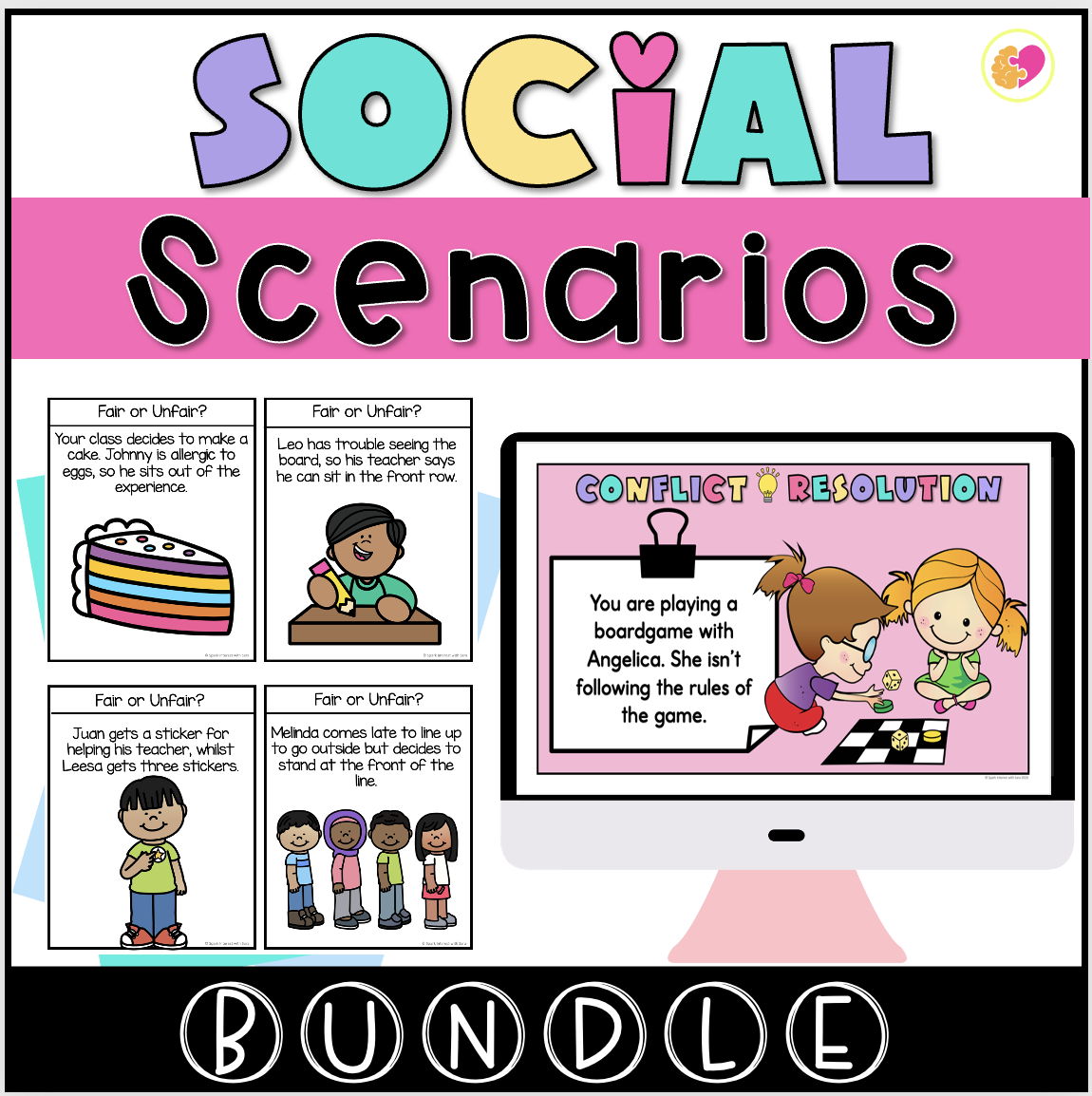
If you’re looking for more real-life scenarios to explore with your students, this 50 Size of the Problem examples for Preschool, Pre-K, and Kindergarten blog post might come in handy.
6 Fun Ways to Teach Size of the Problem Using Big Problem Little Problem Activities
1. Role Play Common Size of Problem Scenarios
Take turns acting out different problem scenarios, and others have to identify the size of the problem being portrayed. This interactive activity allows children to apply their understanding of problem size in a creative and engaging way.
2. Read Books about Size of the Problem
The Problem with Problems by Rachel Rooney
This picture book emphasizes communication, to help little ones and grown-ups alike navigate their peskiest problems. THE PROBLEM WITH PROBLEMS is filled with social-emotional learning-based advice for every kind of situation.
Big Problem Little Problem by Ben Feller
This book is all about conquering frustrations no matter what the problem is, told from the perspective of a father. In this story, a dad teaches his son to solve daily challenges of life and in turn, the surprising ways in which a child can teach a grown-up to remember what is important too.
3. Fun big problem little problem activities: Size of the Problem vs Reaction
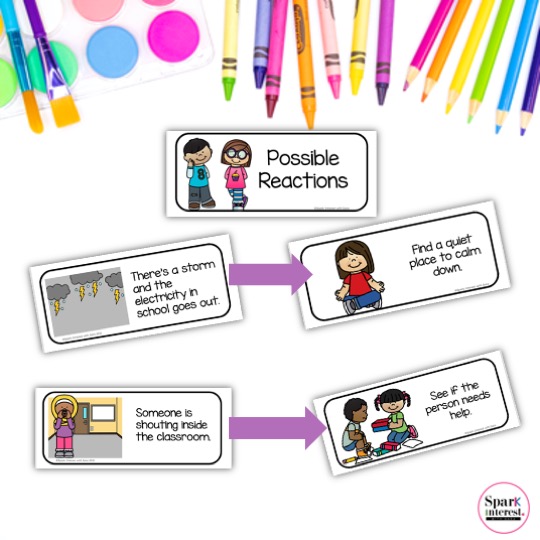
Have fun with your students by having a set of common scenarios and a set of common reactions (productive and not so productive). Invite them to pick a scenario and act it out; then, pick a reaction card and react to that situation in whatever reaction you chose, good or bad.
For example a student may choose:
Scenario: A broken pencil
Reaction: Throw yourself on the floor and cry uncontrollably
This often leads to many giggles.; however, it allows you to ask questions like:
“What is the size of this problem?”
“Is it a big problem or small problem?”
“What makes it a big/small problem?”
“Why do you think it’s a big/small problem?”
“Who gets affected by this problem?”
“How could we possibly solve this problem?”
“How else could you react to this problem?”
Teaching children about problem size goes hand in hand with fostering critical thinking skills. Critical thinking involves analyzing a problem, considering different perspectives, and evaluating possible solutions.
These types of questions encourage critical thinking skills in problem-solving in our students. They encourage our students to think critically and consider the broader implications of a problem even at a young age.
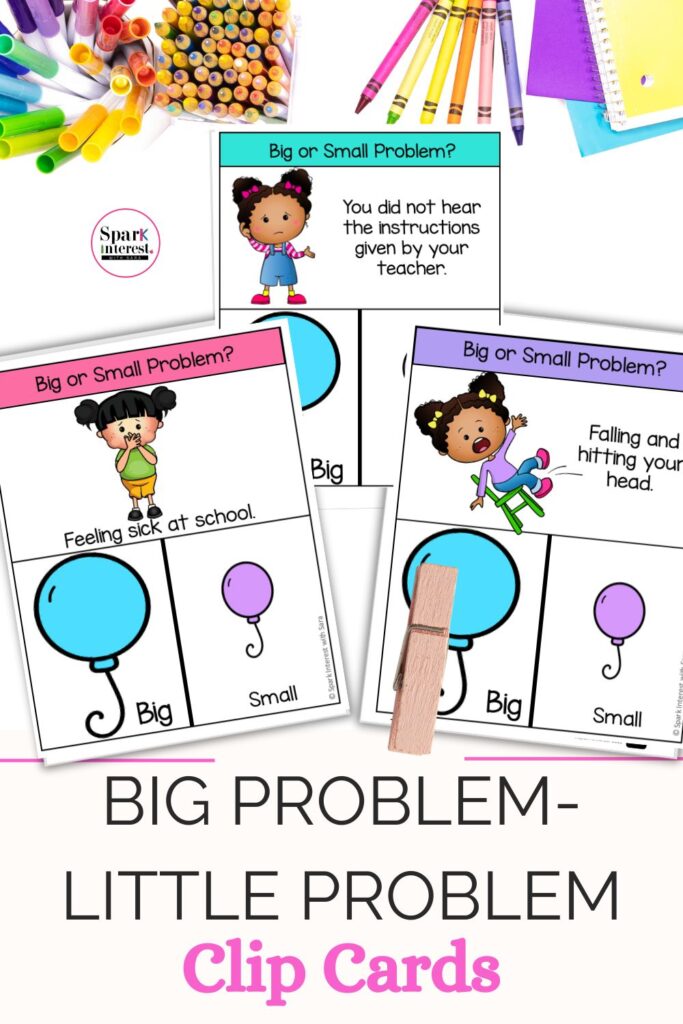
4. Include Big Problem Little Problem Classroom Centers
Classroom centres are such a great way to keep reinforcing this skill after you’ve introduced it together. They give children another chance to revisit the concept in a more hands-on, low-pressure way.
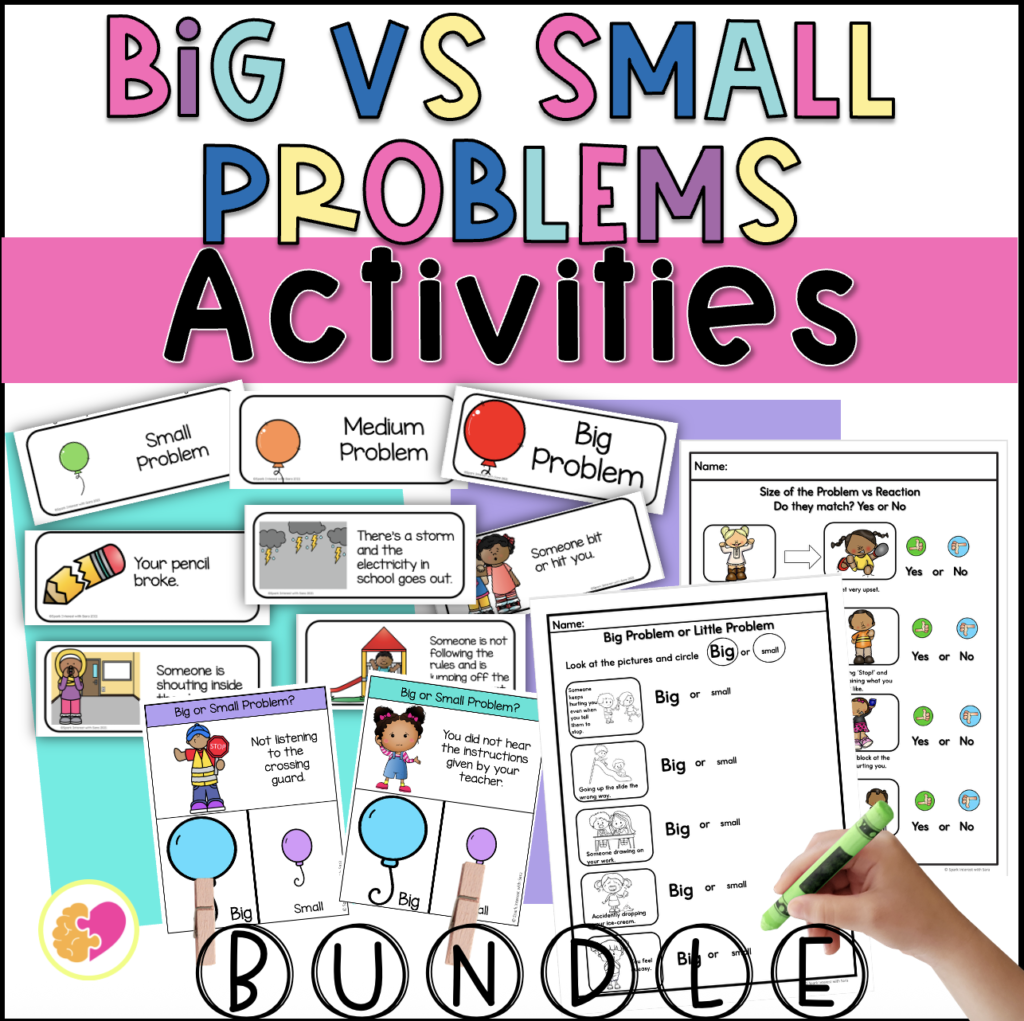
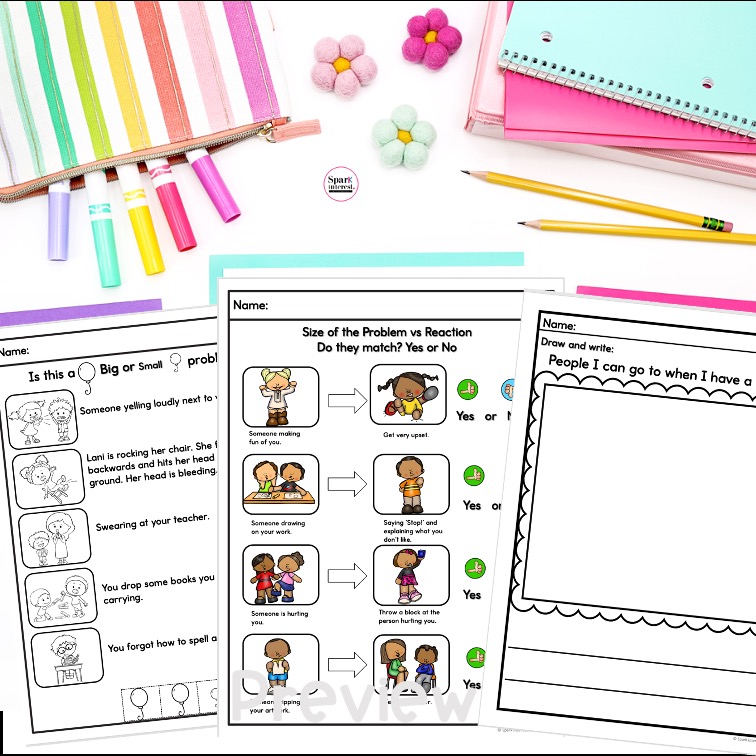
I love using Big Problem Little Problem Clip Cards for this, but simple sorting activities, matching games, drawing prompts, and Big Problem Little Problem Worksheets can also work really well. The beauty of centres is that children get to keep practising the same idea in different ways.
5. Encourage Reflection Through Some Fun Drawing and Writing Activities
Depending on where your students are at, invite them to draw and/or write around:
People I can go to if I have a problem.
What I can do if I have a big problem.
Things I can do when I have a small problem.
What I can do when I have a problem at school.
This will encourage your students to reflect on their learning and allow them to consider how they may solve problems that occur in their own world and who are the people they can go to for support.
6. Extend Learning by Introducing Conflict Resolution Techniques
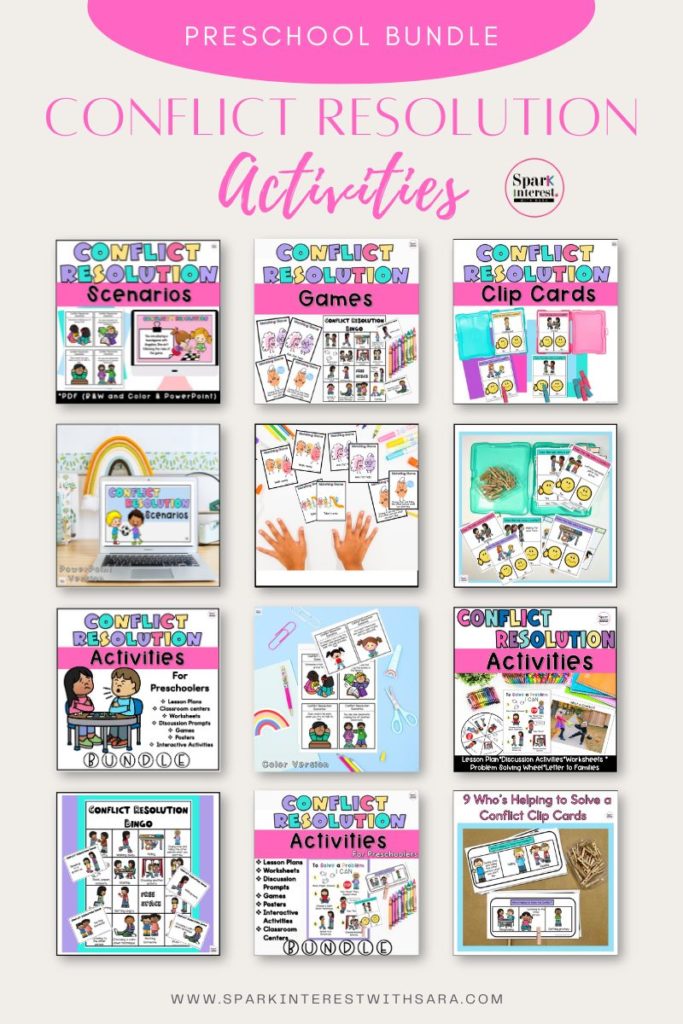
Once your students have mastered the skill of identifying the size of a problem, the next step is to introduce problem solving techniques or conflict resolution techniques. Our preschoolers are just beginning to explore more complex relationships with a wide variety of humans. Often, this can lead to conflict, misunderstanding and a whole lot of confusion.
It will help your students tremendously if you help them explore what common conflicts or problems they may encounter. In addition, teach different techniques to solve minor conflicts or problems. Then, help them understand what to do if they can’t solve a minor conflict or problem on their own. Such a valuable skill indeed!
Conclusion: Teach Size of the Problem Using Big Problem Little Problem Activities
Teaching Size of the Problem is one of those things that can have such a ripple effect in the classroom.
It helps children build perspective. It supports emotional regulation. It gives them a way to pause, think, and work out what to do instead of reacting straight from the feeling.
And truly, that matters.
Because some days in Preschool, you are not just teaching letters and numbers. You are helping a room full of little humans learn that a snapped crayon is frustrating, yes, but not an emergency. That being left out hurts, and we can work through it. That some problems need a small response, and some need much bigger support.
Like any social-emotional skill, this takes time. It takes modelling, repetition, discussion, and lots of chances to practise in real classroom moments.
But it is such worthwhile work.
If you’d like ready-to-use materials to keep teaching and reinforcing this skill, my Big vs Small Problem Activities Bundle is a great next step for Preschool, Pre-K, and Kindergarten classrooms.
And if you want even more support with this topic, you might also like these 50 Size of the Problem examples for Preschool, Pre-K, and Kindergarten or these 6 easy ways to teach Size of the Problem in your Preschool classroom.
One of the things I love about teaching this concept is that it does not have to feel heavy or overly serious. Young children learn best when they can see it, talk about it, act it out, and revisit it in lots of different ways. That’s where these activities come in.