
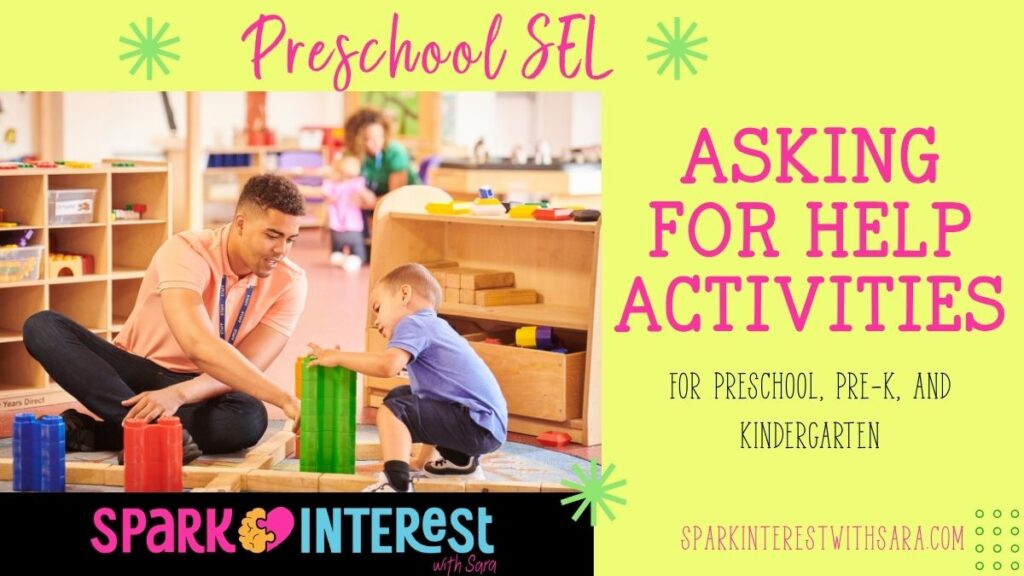
Asking for help isn’t as easy as it sounds. Being a preschool teacher, it’s something we see everyday.
Some children will sit there struggling with a task and say absolutely nothing.
Some will get frustrated and burst into tears.
Some will wander off, shut down, or start acting silly instead of simply asking for help.
A lot of young children genuinely do not yet know how to ask for help.
That’s why teaching this as a social skill matters so much.
And honestly, it is not enough to just say, “Ask for help if you need it.” Preschoolers need to see it, hear it, practise it, and revisit it in lots of simple ways before it starts to feel natural.
So if you’re looking for asking for help activities for Preschool, Pre-K, and Kindergarten, here are some classroom-friendly ideas that can help young learners build confidence with this important skill.

Why asking for help activities matter
Asking for help is one of those skills that seems simple from the outside, but for little kids, there is actually a lot going on underneath it.
Before a child asks for help, they often need to:
- notice that they are stuck
- realise they cannot solve the problem on their own
- know who they can go to
- have the words to ask
- and feel safe enough to actually do it
That is a lot for a preschooler. So that is why asking for help activities can be so helpful.
They make the skill more concrete. They give children repeated practice. And they create lots of opportunities to model the language and behaviour in calm, supportive ways before the real-life moment happens.
1. Role play common classroom situations
Role play is one of the best asking for help activities for preschoolers because it gives children the chance to practise the skill before they need it in real life.
You might act out situations like:
- a child cannot open their lunchbox
- they do not know where to put their work
- they need help zipping up a bag
- they are confused by the instructions
- they feel worried because something has happened with a friend
Talk through each one together and ask:
- Does this child need help?
- Who could they ask?
- What could they say?
This kind of practice is so helpful because children get to hear the language, try it out, and see what asking for help actually looks like.
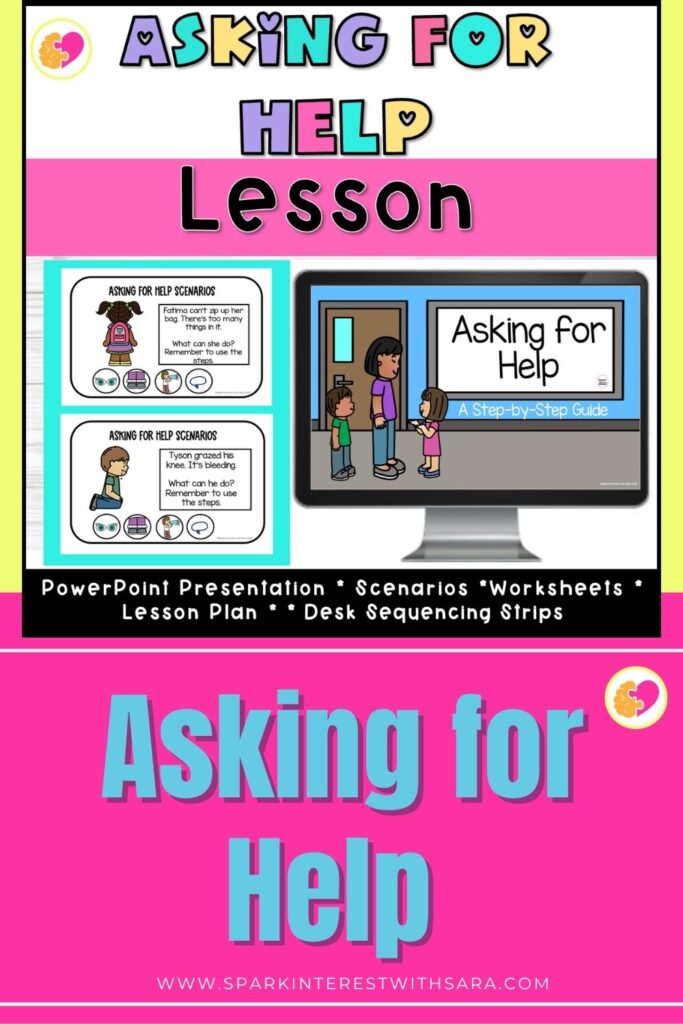
If you’d like ready-to-use scenarios for role play and discussion, my Asking for Help Lesson for Preschool | Social Skills Activity includes classroom-friendly examples to help children practise this skill.
2. Use puppets to model asking for help
Puppets can make social-emotional learning feel playful and safe, which is exactly why they work so well in preschool.
You might have a puppet:
- get stuck with a task
- feel worried
- not know what to do
- need help finding something
Then invite the children to help the puppet work out:
- whether they need help
- who they can ask
- what they could say
This is such a lovely way to teach the language without putting too much pressure on children who are still building confidence.
3. Sort “I can do it myself” and “I need help”
This is a really simple but powerful asking for help activity.
Give children different classroom situations and sort them into:
- I can do this by myself
- I need to ask for help
You could use examples like:
- putting my hat on
- opening a tricky lunchbox
- tying shoelaces
- cleaning up blocks
- feeling scared because someone is hurting me
This helps children start thinking about independence, problem-solving, and when it is appropriate to seek support.
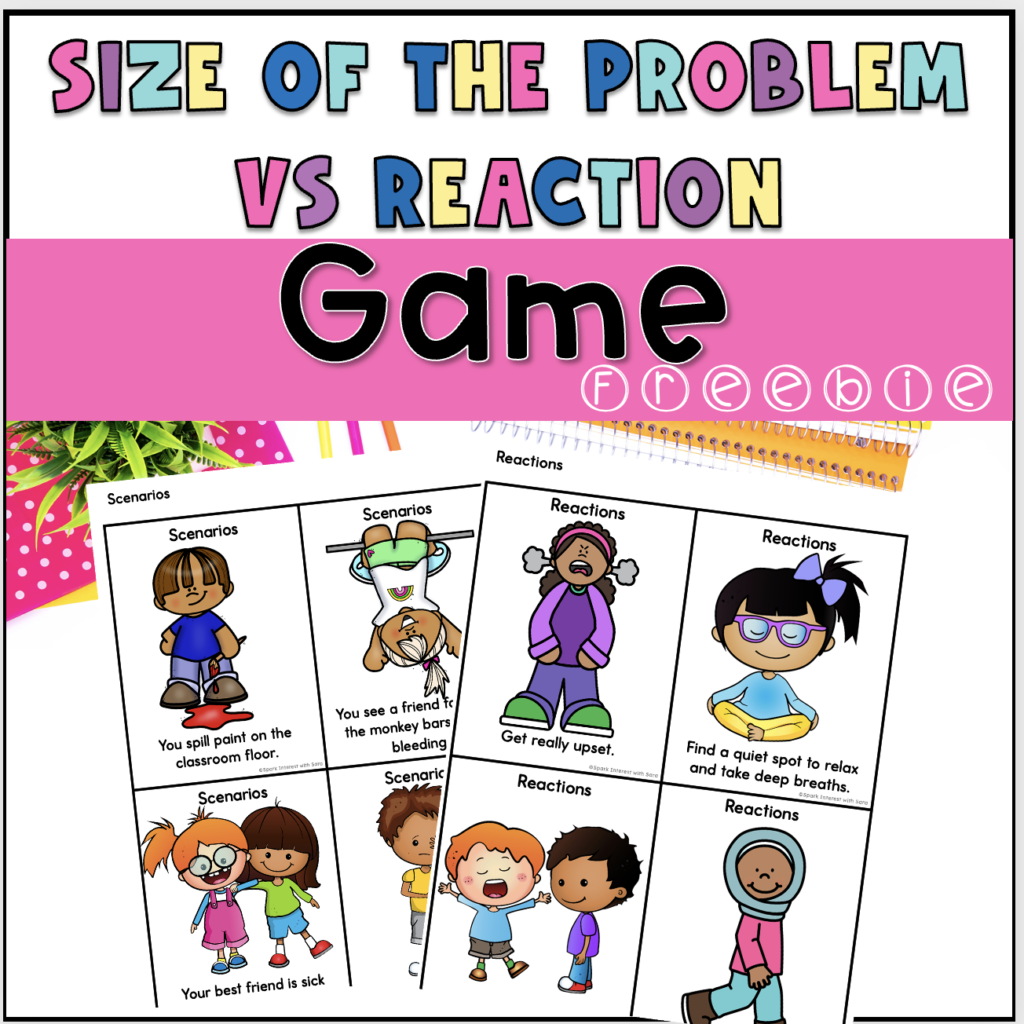
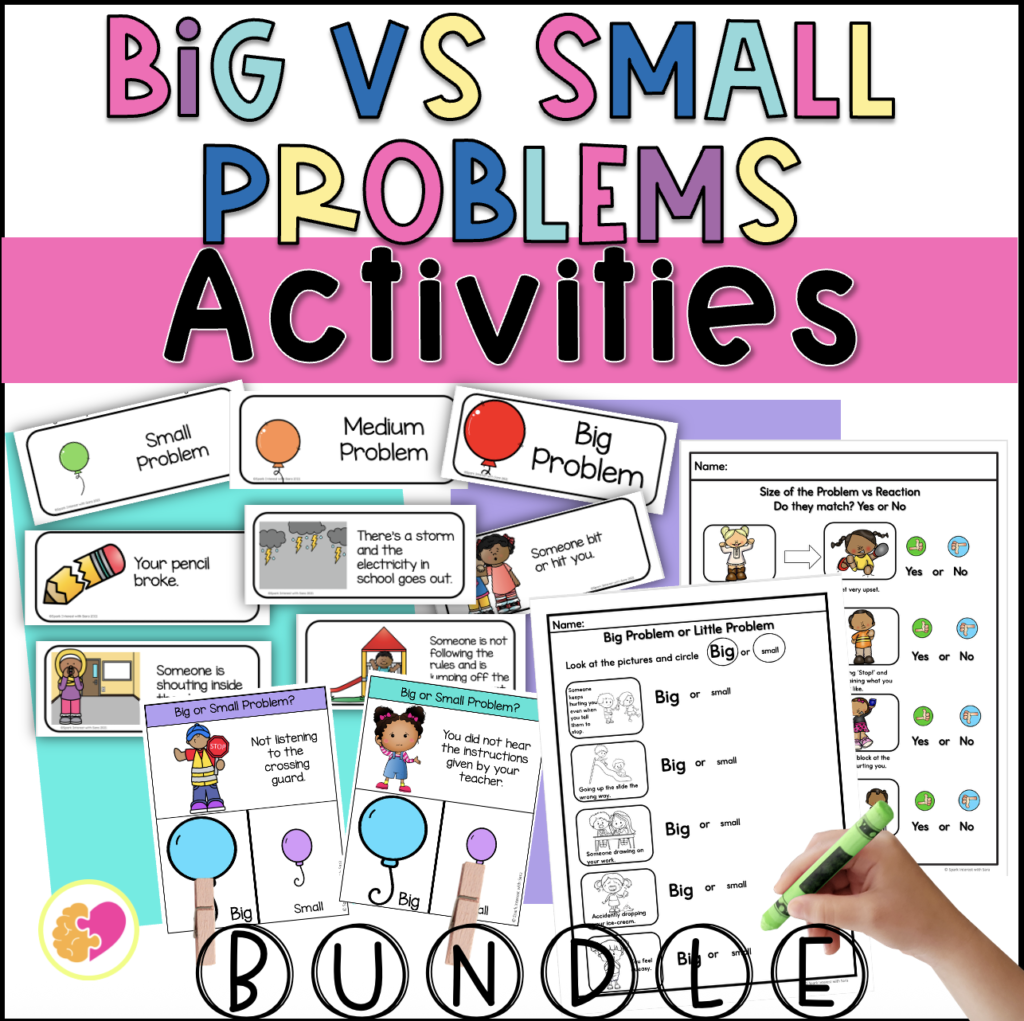
It also pairs beautifully with Size of the Problem because children begin to understand when something is manageable on their own and when they need help.
If you’re also helping your students understand when they can solve a problem themselves and when they need support, my free Size of the Problem vs Reaction Game could be a helpful next step too.
4. Create an anchor chart together
Making an anchor chart together is such a simple way to reinforce the skill.
You could create a chart with headings like:
- When might I need help?
- Who can I ask?
- What can I say?
- What are the steps for asking for help?
Because the chart is created with the children, it becomes a meaningful visual reminder you can keep coming back to during the preschool day.
And that repeated reference really helps.
5. Practise sentence starters
Some preschoolers know they need help, but the words do not come easily in the moment.
That is why sentence starters are so helpful.
You might practise simple phrases like:
- Can you help me?
- I’m stuck.
- I need help, please.
- Can you show me?
- I don’t know what to do.
You can practise these during group time, in partner talk, or as part of role play.
The more children hear the words and say them out loud, the easier it becomes for them to use that language when they really need it.
6. Use visual supports
Visuals can make such a difference for young children.
A child who is overwhelmed or frustrated may not remember the words in the moment, but a visual reminder can help.
You might use:
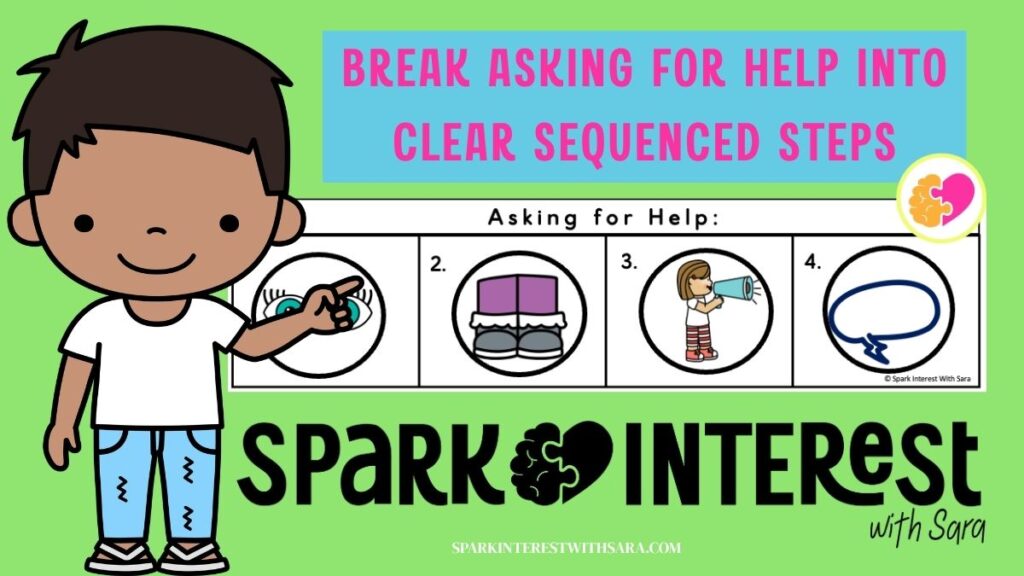
- a poster showing the steps for asking for help
- sequencing cards
- simple scenario cards
- a prompt card near a work area
These supports help children remember what to do when they are feeling stuck.
Visual supports like posters, sequencing strips, and scenario cards can be especially helpful when children need a clear reminder of the steps.
7. Talk through real classroom moments
Some of the best teaching happens right there in the moment.
If a child is getting frustrated or starting to unravel, you can gently coach them by saying things like:
- It looks like you might need help.
- Who could you ask?
- What could you say?
- Let’s practise asking for help together.
These small, real-time moments are often where the learning really starts to stick.
Because children are not just hearing about the skill. They are using it in the situation where they need it most.
8. Read books that support the skill
Books are such a lovely way to explore social skills in preschool.
When a character feels stuck, worried, confused, or unsure, pause and ask:
- Do they need help?
- Who could they ask?
- What could they say?
This helps children see asking for help as a normal and useful part of everyday life.
Some book ideas:
Solutions for Cold Feet and Other Little Problems By Carey Sookocheff
The Problem with Problems by Rachel Rooney, illustrated by Zehra Hicks
It also gives you a calm, shared moment to talk about the skill without it being connected to a child’s own frustration in that moment.
What to say when modelling asking for help
Sometimes the most useful thing is simply giving children the language.
You might model phrases like:
- I’m stuck. Can you help me?
- I don’t know what to do.
- Can you show me?
- I need help, please.
And when coaching children, you might say:
- It’s okay to ask for help.
- Let’s think about what you could say.
- Who could help you with this?
- Let’s practise asking together.
The more calm, simple language children hear, the easier it becomes for them to use it themselves.
A ready-to-use asking for help lesson for Preschool, Pre-K, and Kindergarten
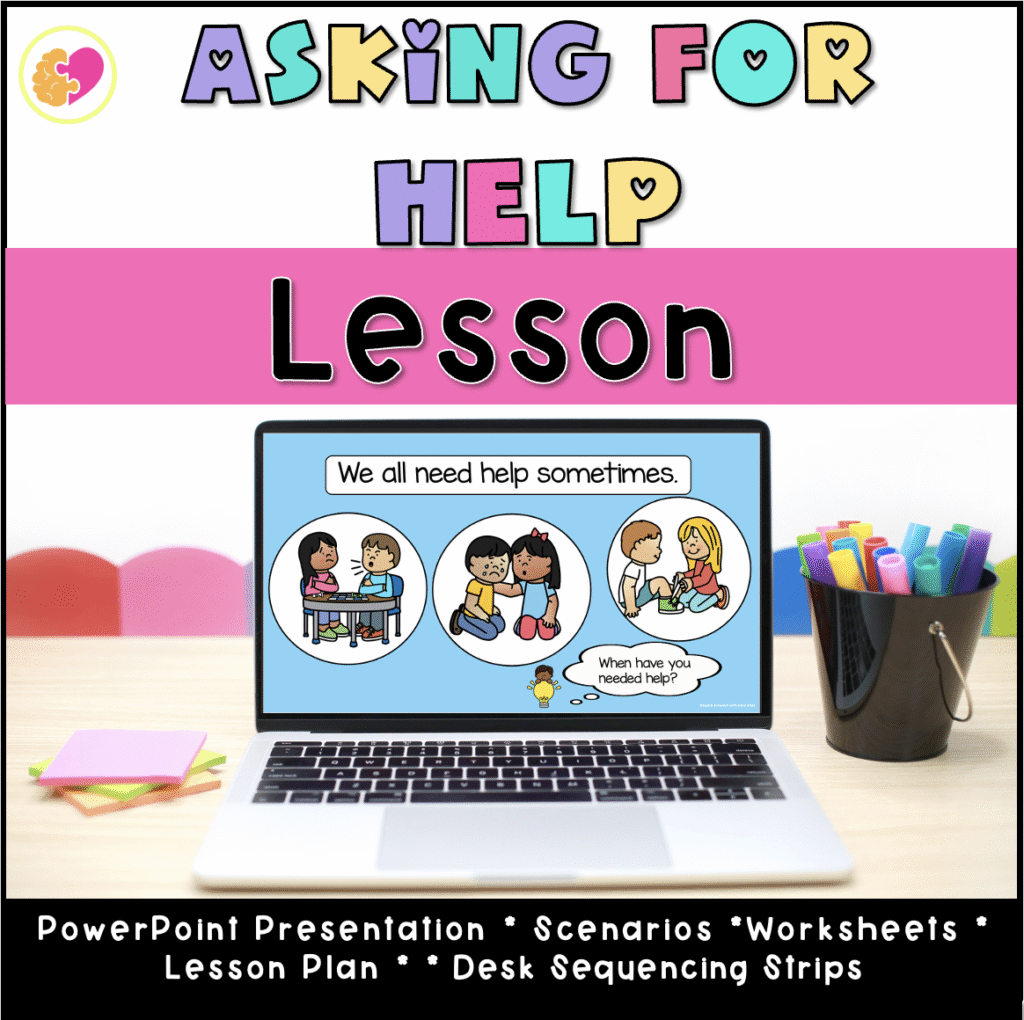
If you’d like a ready-to-use Asking for Help lesson for Preschool, Pre-K, and Kindergarten, my Asking for Help Lesson for Preschool | Social Skills Activity is designed to support this skill in a clear and practical way.
It includes:
- a detailed lesson plan
- PowerPoint presentation
- asking for help scenarios
- printables
- sequencing strips
- and visuals to support the 4 Steps for Asking for Help
It’s a really helpful option if you want a simple, structured way to teach this important social skill without creating everything from scratch.
If you want the bigger picture too
If you’re looking for a broader overview of why this skill matters and how to introduce it, you might also like my post on How to Teach Preschoolers to Ask for Help.
Related social skills to teach alongside asking for help
Asking for help connects naturally with other important social-emotional skills too.
You might also want to explore:
- Size of the Problem
- Conflict Resolution
- feelings and emotional regulation
- friendship and communication skills
Because often, children find it easier to ask for help when they can also recognise how big a problem feels, notice their emotions, and understand what kind of support they need.
Final thoughts on asking for help activities for preschoolers
Asking for help is one of those skills that can make such a big difference in a preschool classroom.
It helps children move through frustration more calmly. It supports confidence, communication, and problem-solving. And it reminds little learners that they do not have to stay stuck when something feels hard.
Like any preschool social skill, it takes repetition.
It takes modelling.
It takes practice.
And it takes lots of calm support along the way.
But it is such worthwhile work.
Because when preschoolers learn how to ask for help, they are learning that using their voice matters and that support is available when they need it.

