
If you teach young children, you already know this truth deep in your bones: not every problem feels small to a child.
A broken crayon can feel devastating. Someone sitting in the “wrong” chair can completely derail a morning. A missing hat, the last blue marker being gone, a friend saying, “You can’t play”… suddenly we are in full tears, big feelings, and a reaction that seems enormous compared to what actually happened.
And honestly, if you’ve ever found yourself thinking, Well… that escalated quickly, you are definitely not alone.
That is exactly why teaching Size of the Problem is so helpful in the early years.
It gives children a way to start sorting through what is happening. Is this a small problem? A medium problem? A big problem? Do I need a tiny response, some support, or immediate adult help?
Over time, this kind of thinking can make such a difference. It supports emotional regulation, problem-solving, flexibility, friendship skills, and conflict resolution too.
One thing I have found really helpful when teaching this concept is using lots of simple, relatable examples.
Because before children can sort problems by size, they need practice hearing what those problems actually sound like in real life. Not in a big abstract way. In a very child, very classroom, very this just happened near the glue table kind of way.
So if you have been looking for Size of the Problem examples for Preschool, Pre-K, and Kindergarten, here are 50 classroom-friendly examples you can use in discussions, morning meeting, SEL lessons, role play, and small groups.
If you are newer to this topic, you may also want to start with my post on 5 Easy Ways to Teach Size of the Problem in Your Preschool Classroom or this one on 6 Fun Ways to Teach Size of the Problem Using Big Problem Little Problem Activities.
What is Size of the Problem?
Size of the Problem is a social-emotional learning concept that helps children understand that different problems have different levels of seriousness.
Some problems are small. They might feel annoying, frustrating, or disappointing, but they can usually be solved pretty quickly.
Some problems are medium. They may need more help, more time, or more support to work through.
And some problems are big. Those are the ones that need adult help straight away.
Now of course, this is not something most young children just magically know.
They are still learning perspective. They are still learning emotional regulation. They are still learning that the feeling they have on the inside and the actual size of the problem are not always the same thing.
That is why repeated practice matters so much.
I have found that the more chances children get to hear examples, sort examples, and talk through examples, the more this skill starts to click.
How to use these Size of the Problem examples in the classroom
There are so many simple ways to use these Size of the Problem examples in the classroom.
You might read one aloud during morning meeting and have children vote with their hands whether it is a small, medium, or big problem.
You might use them in small group and really talk through the thinking.
You could turn them into a sorting activity, use them in role play, or pop a few into your social skills lessons over the week.
And if you are anything like me, you might also start hearing these examples in your head during the day when real classroom moments pop up.
- A child crying because someone touched their pencil? Small problem.
- A child feeling left out and not knowing how to join in? Maybe medium.
- A child is hurt and bleeding? Big problem.
That kind of real-time connection is where the teaching becomes really meaningful.
As you go through the examples, you might ask:
- Is this a small, medium, or big problem?
- How might the child feel?
- What could they do?
- Who could help?
- What would a matching reaction look like?
That last question is such a powerful one.
Because so often, this work is not just about identifying the problem. It is about helping children begin to match their response to the situation.
If you want ready-to-use materials for practising these scenarios, my Size of the Problem scenarios is a great next step.
20 small problem examples for kids
These are the kinds of problems that can absolutely feel upsetting in the moment, especially to little people, but they are usually manageable and can often be solved fairly quickly.
And let’s be honest, these are often the ones that take up a surprising amount of our day.
- Your pencil breaks.
- You cannot find your glue stick.
- Someone is sitting in the spot you wanted.
- Your sock feels funny in your shoe.
- You dropped your crayon.
- The block tower fell over by accident.
- You wanted the red marker, but someone else is using it.
- Your paper has a little tear.
- You spilled a tiny bit of water.
- Your name tag fell off your desk.
- You cannot open your lunch container right away.
- Someone went in front of you in line by mistake.
- You lost one piece of a puzzle.
- Your shoelace came undone.
- You do not like the colour cup you got today.
- You forgot where to put your finished work.
- Someone bumped into you by accident.
- Your book fell on the floor.
- You have to wait for a turn.
- Your sticker ripped when you peeled it off.
I can already picture at least five of these happening before recess.
15 medium problem examples for kids
These problems are a bit bigger.
They may need stronger problem-solving, adult support, or a bit more time to sort through, but they are not emergencies.
This is often where things get tricky for young children, because these problems can feel really big emotionally, even when they are not unsafe.
- A friend says something unkind.
- Someone keeps grabbing toys from you.
- You cannot find your lunchbox.
- You feel left out during playtime.
- Two children want the same toy and cannot work it out.
- You are feeling very frustrated and need help calming down.
- You do not know where your class is supposed to go.
- Someone knocked over your work on purpose.
- You have a tummy ache and do not feel well.
- Your special comfort item is missing.
- You are confused about what to do and feel overwhelmed.
- A classmate keeps not listening when you say stop.
- You got a small cut and need help.
- Someone ruined your drawing.
- You feel worried because your grown-up is late for pickup.
These are the kinds of examples that usually lead to the richest conversations, because there is more nuance in them.
They are not tiny, brush-it-off moments. But they are also not emergencies.
They are the kinds of situations where children often need help learning what to do next.
15 big problem examples for kids
These are more serious problems that need adult help straight away.
I always think this is such an important part of the teaching too, because we do want children to know that some problems really are big and important. We never want them walking away with the message that they have to handle everything on their own.
- Someone is badly hurt.
- There is blood and the injury looks serious.
- You cannot find your teacher or safe adult.
- A child runs out of the classroom or gate area.
- There is a fire drill or emergency.
- Someone is hitting or hurting others.
- You feel unsafe.
- A stranger is trying to talk to you or take you somewhere.
- A child is choking.
- Someone says they are going to hurt themselves or someone else.
- You are lost and do not know where your class is.
- There is an unsafe object on the floor, like broken glass.
- Someone is being seriously bullied or threatened.
- You are very sick and need immediate help.
- There is an emergency at school and adults are giving urgent instructions.
This is often where I slow down and really emphasise: Big problems need adult help right away.
That clear language matters.
A gentle reminder when teaching Size of the Problem
This is one of those topics where I always think a little nuance goes a long way.
Because yes, we want children to learn that not every problem is a big problem.
But we also do not want to dismiss how they feel.
A small problem can still feel huge to a little person.
That child with the ripped sticker may genuinely feel heartbroken. The child whose block tower fell may feel devastated because they worked so hard on it. The child who did not get the blue cup may be carrying all kinds of other things into the day already.
So for me, this has never been about saying, “That’s not a big deal.”
It is much more about helping children hold two truths at once:
Your feelings are real. And we can learn what kind of problem this is, and what to do next.
That feels kinder. More grounded. And honestly, more useful.
I also love pairing this work with my Identify Feelings and Emotions resource because children need support naming their feelings as well as understanding problem size.

Tips for teaching big problem little problem in the classroom
Once you have a bunch of big problem little problem examples to work with, the next step is helping children really engage with them in meaningful ways.
Here are a few simple ways to make these examples come alive in the classroom.
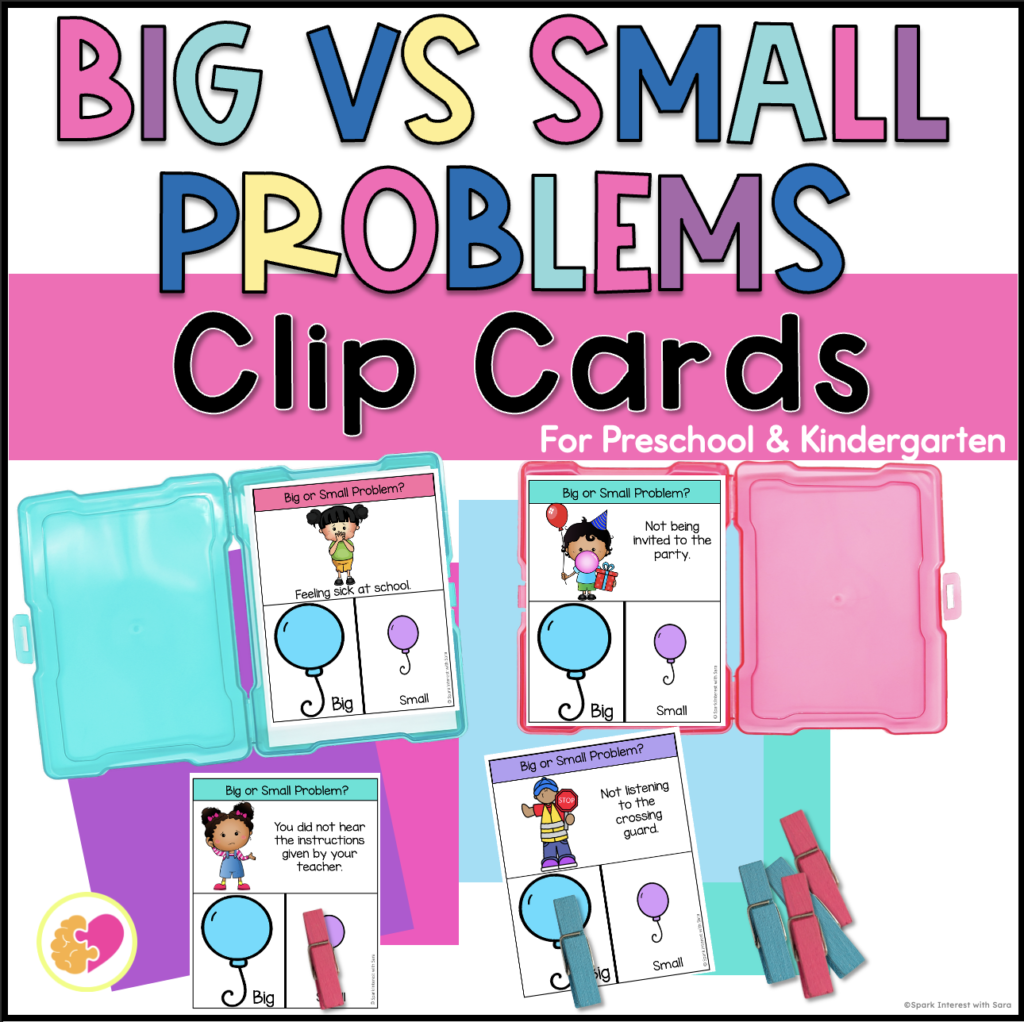
Use visuals
Young children do so well when they can see the categories.
Small problem. Medium problem. Big problem.
When the language is paired with simple visuals, it gives children something concrete to hold onto. That can make the sorting and discussion so much easier.
If you want more ideas for how to introduce this visually, have a look at my post on big problem little problem activities for preschool.

Add role play
This is where things get fun and useful.
You can act out a few scenarios together and talk through them as a class. Children love this, and it gives them a chance to practise the thinking in a safe and playful way.
It also helps you see where they are getting stuck.
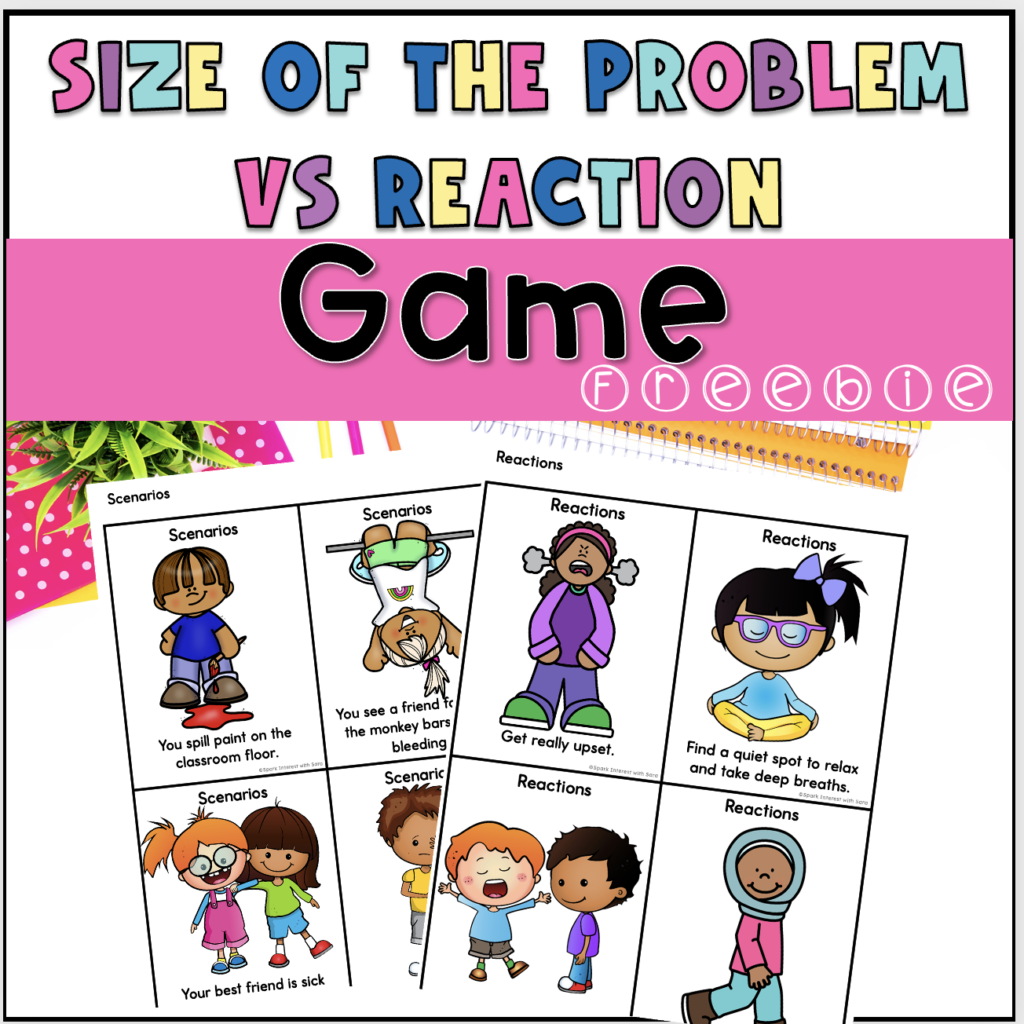
Connect it to reaction size
This is such an important part of the learning.
Once children start to understand problem size, you can gently guide them to think about whether their reaction matched the size of the problem.
And whew, that can be powerful.
Especially for those children who go from zero to one hundred over a snapped pencil or the wrong coloured mat.
If this is an area your students need support with, you can grab my Size of Reaction freebie.
Revisit it often
This is definitely not a one-and-done lesson.
It is one of those concepts that grows over time through repetition, conversation, and real-life classroom moments.
A quick chat during morning meeting. A sorting activity in small group. A gentle reminder after recess. It all counts.
A helpful resource for teaching Size of the Problem
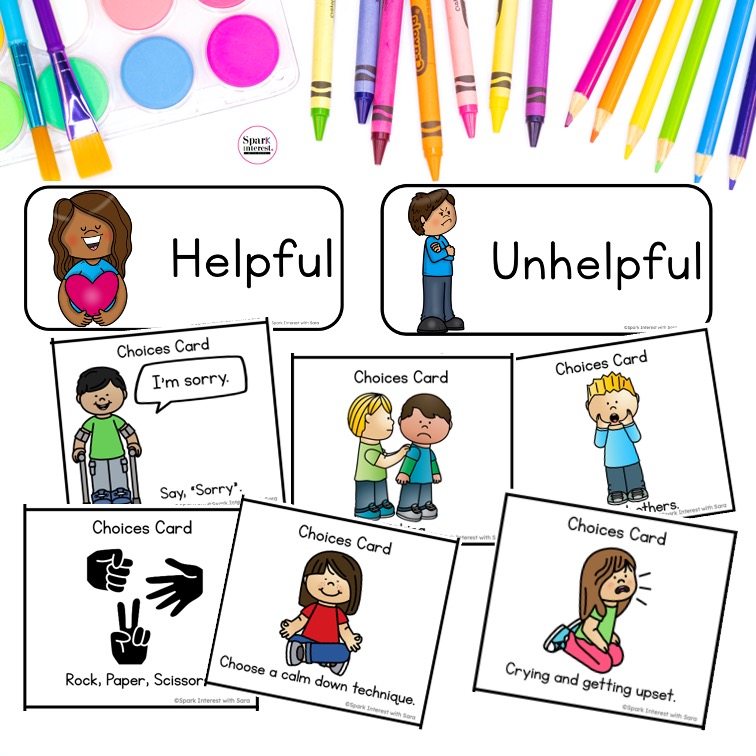
If you want ready-to-use activities to teach this concept, my Size of the Problem resource is designed to help young children explore big, medium, and small problems in a hands-on, developmentally appropriate way.
It works beautifully for Preschool, Pre-K, Kindergarten, social skills groups, and SEL lessons.
And if you are teaching this topic already, you know how helpful it is to have something ready to go instead of reinventing it all from scratch.
You may also want to pair it with some of your other social-emotional learning topics like conflict resolution activities or friendship and problem-solving work, because these skills connect so naturally in the classroom.
Final thoughts on Size of the Problem examples for kids
Teaching Size of the Problem examples for kids is one of those things that can have such a ripple effect in the classroom.
It supports emotional regulation. It strengthens problem-solving. It helps children build perspective. And over time, it can make those everyday classroom challenges feel a little more manageable for everyone, including us.
Because truly, some days you are not just teaching letters and numbers. You are helping a room full of little humans learn that a broken crayon is frustrating, yes, but not an emergency.
And that work matters.
Using lots of examples is one of the best ways to make this concept click.
The more children hear them, sort them, discuss them, and practise them, the more likely they are to start using that thinking in real classroom moments.
And that is when the learning really starts to stick.

