
Have you ever been in the middle of a preschool day when two children want the same toy, someone feels left out of a game, or a disagreement suddenly turns into a much bigger situation than anyone expected?
These moments are part and parcel of life in an early childhood setting. And while they can sometimes leave us feeling like we’re spending half the day helping children navigate friendships and disagreements, they’re also wonderful opportunities for learning.
But here’s something I’ve come to appreciate: we don’t always have to wait for these situations to happen before we start exploring them with children.
Social scenarios are a great way to introduce everyday situations and give children the opportunity to think about what might be happening, how different people might feel and what they could do.
Rather than jumping in with all the answers, we can get curious. Ask questions, listen to their ideas and give them space to explore different possibilities. You might be surprised by the solutions they come up with!
After all, children bring their own experiences, knowledge and perspectives to the table. They’re more than capable of thinking through tricky situations when we give them the time and opportunity to do so.
In this post, I’m sharing some practical ways to use social scenarios in the preschool classroom, from group discussions and role play to problem-solving activities that encourage children to think for themselves.
Whether you’re exploring friendship, kindness, fairness or conflict resolution, there are plenty of ways to weave social scenarios into your everyday program.
What Are Social Scenarios?
Think of social scenarios as little snapshots of everyday situations children might encounter when playing, learning and interacting with others.
They might involve two children wanting the same toy, someone being left out of a game, a disagreement over whose turn it is or a child noticing that a friend is feeling sad.
Social scenarios give us a way to bring these everyday situations into a conversation, even when they aren’t happening right in front of us.
For example, you might introduce a scenario like this:
Two children are playing in the sandpit. Another child comes over and asks if they can join in, but the children say no because they already have a game going.
What do the children think about this situation?
There isn’t necessarily one right answer. You might hear different opinions, ideas and perspectives, and that’s exactly what makes these conversations interesting.
You could explore questions such as:
- Why might the children have said no?
- How might the child who wanted to join in be feeling?
- Is there another way they could approach the situation?
- What else could happen?
The idea is to give children opportunities to explore social situations, share their own experiences and consider different ways of responding.
Social scenarios can be presented as short stories, picture cards, puppets, role play or simply an idea you introduce during a group discussion.
And the best part? You don’t need a complicated activity or elaborate setup. Sometimes all you need is an interesting situation and a few good questions to get the conversation started.

Why Use Social Scenarios in Preschool?
One of the things I love about using social scenarios is that they give children an opportunity to explore situations without having to be in the middle of them.
Think about it. When two children are having a disagreement over a toy, emotions can run high. It’s not always the easiest time to stop, think and consider what else might be happening.
But when we introduce a similar situation through a story or scenario, children have a little breathing room. They can explore what’s happening, share their thoughts and consider different possibilities without the pressure of being directly involved.
There are lots of valuable learning opportunities here.
Developing empathy and understanding different perspectives
Children can explore how different people might feel in the same situation. They might discover that two people can experience the same event quite differently, which opens up some interesting conversations about feelings and perspectives.
Building problem-solving skills
Rather than relying on an adult to step in with a solution, children get to brainstorm their own ideas. They can explore different approaches, consider what might happen next and learn that there isn’t always just one way to solve a problem.
Strengthening communication skills
Talking through scenarios gives children opportunities to practise expressing their ideas, listening to others and finding words to communicate their thoughts and feelings.
Developing confidence and autonomy
When we genuinely invite children to share their ideas and opinions, we’re showing them that their thinking matters. They begin to recognise that they can have a voice, make decisions and contribute to finding solutions.
Exploring social boundaries and relationships
Scenarios can help children think about what it means to be a friend, how to include others, how to speak up for themselves and what respectful interactions look like.
And perhaps one of the biggest benefits? We get to learn more about how children see the world. Their responses can surprise us, challenge our own thinking and give us opportunities to explore ideas we might never have considered.
Before I jump into the 7 practical ways to use social scenarios in your classroom, I wanted to make sure you’ve had a chance to grab my latest freebie… ⤵
Ever heard “THAT’S NOT FAIR!” in your classroom?
If you’re exploring fairness with your students, having a story to read and discuss together can be a great way to get the conversation started. I’ve put together a FREE Fairness Social Story that you can use to introduce the topic and encourage your students to think about what fairness looks like in different situations.
If you’ve spent time helping preschoolers navigate sharing, taking turns and waiting, you’ll know this familiar moment!
This free Fairness Social Story uses simple language and relatable classroom situations to help your students explore fairness, express their feelings and practise navigating everyday situations.
Grab your FREE Fairness Social Story!

7 Practical Ways to Use Social Scenarios in the Preschool Classroom
Social scenarios don’t need to be a big, elaborate activity. You can introduce them during group time, use them as a starting point for role play or bring them into conversations throughout the day.
Here are seven ways to get started.
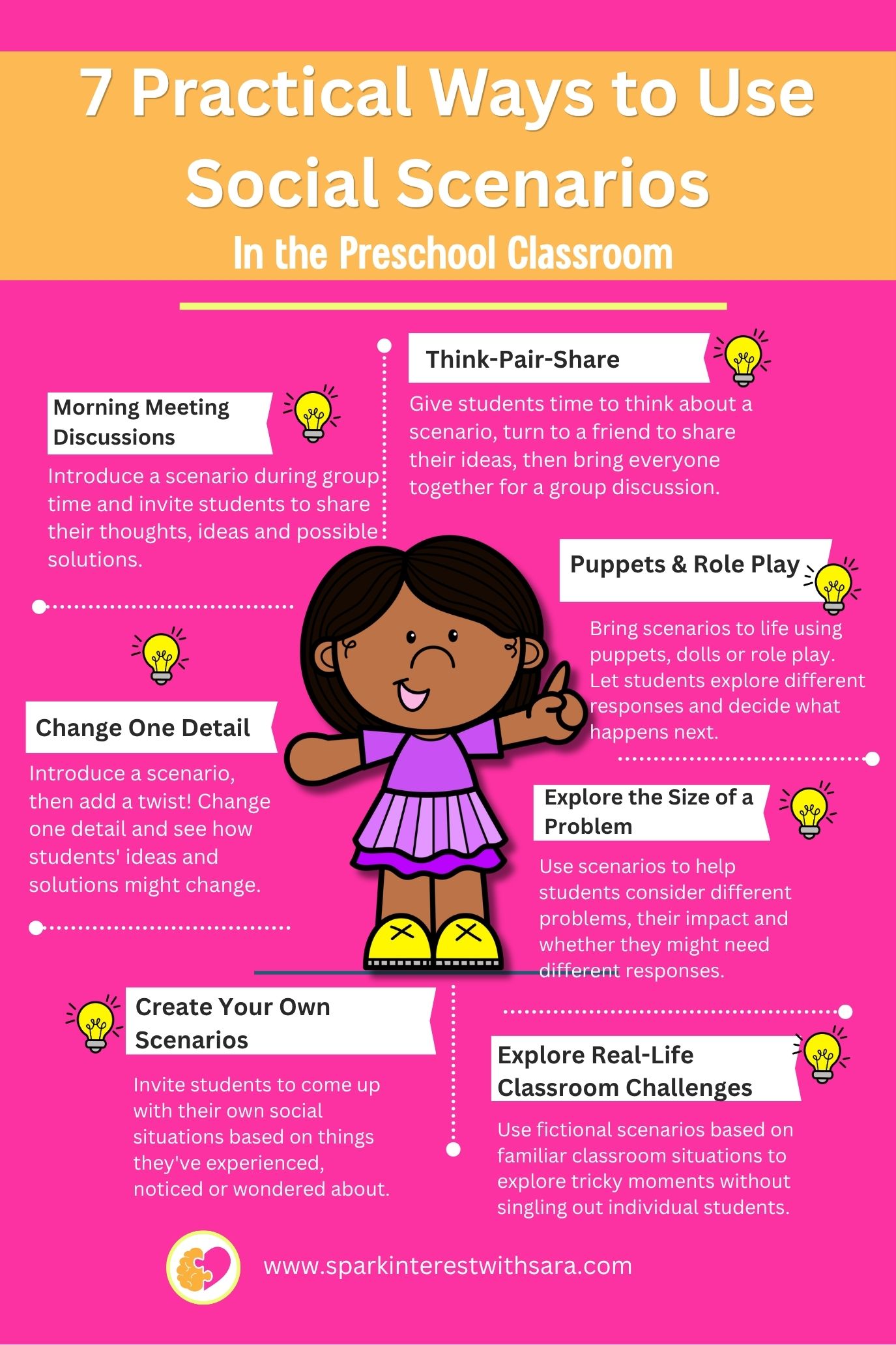
1. Use Social Scenarios as a Morning Meeting Discussion
Group time is a great opportunity to introduce a social scenario and see where the conversation takes you.
Choose a situation that’s familiar to the children and read it aloud. Give everyone a little time to think before inviting them to share their ideas.
For example:
Two children are building a tower with blocks. Another child comes along and starts adding blocks to their tower without asking. One of the children becomes upset and tells them to stop.
You could ask:
- What’s happening here?
- Why do you think the child became upset?
- What might the other child be thinking?
- What could they do next?
Don’t be too quick to jump in with a solution. Give children time to share their thoughts, listen to one another and explore different possibilities.
You might find that one scenario sparks a whole conversation about asking before joining in, respecting other people’s work or finding ways to play together.
Teacher tip: You don’t need to discuss a dozen scenarios in one sitting. One interesting situation and a good conversation can be more valuable than rushing through several.
2. Try Think-Pair-Share
If you’re looking for a way to get more children involved in social scenario discussions, try a simple think-pair-share activity.
It’s an easy way to encourage children to think independently, share their ideas with a friend and listen to different perspectives.
Here’s how it works:
Think: Introduce a social scenario to the whole group. Give children a little time to think about what’s happening and what they might do.
Pair: Ask children to turn to the person sitting next to them and share their thoughts. They might have similar ideas, or they might come up with completely different ways to approach the situation.
Share: Bring everyone back together and invite children to share some of the ideas they’ve discussed with their partner.
For example:
Two children are playing in the home corner. Another child comes over and asks if they can join in, but the children say they don’t want anyone else playing.
What could the children do? How might the child who wants to join in be feeling? Are there different ways they could handle this?
You could also invite a few children to share what their partner suggested. This is a lovely way to encourage listening and help children recognise that other people might have different ideas.
Teacher tip: If you have a child who naturally enjoys taking on a leadership role, you could invite them to help facilitate a small-group discussion. Just remember that the aim is to give everyone a voice, rather than having one child do all the talking!
3. Bring Scenarios to Life With Puppets and Role Play
If you’ve ever used puppets with preschoolers, you’ll know how quickly they can capture children’s attention!
Puppets, dolls and other props are a great way to introduce social scenarios without children feeling like they’re being put on the spot.
For example, you could have two puppets who both want to play with the same toy. One puppet grabs it, while the other becomes upset.
Pause the action and ask the children what they think.
What could the puppets do? What might they say? Are there other ways they could work things out?
You could then invite children to take on the roles of the puppets and act out their own ideas.
Here’s a fun twist: Let the children direct the puppets! Ask them what should happen next and follow their suggestions. You might end up with a completely different ending to the one you expected.
4. Change One Detail and See What Happens
This is one of my favourite ways to extend a social scenario and encourage children to think a little deeper.
Introduce a situation, allow children to discuss it, and then change one small detail.
For example:
Two children are playing with a ball. One child wants a turn, but the other doesn’t want to share.
The children might suggest taking turns or finding another ball.
Now change the scenario.
“What if there’s only one ball?”
Or:
“What if the child who has the ball is still using it to finish their game?”
Does that change what the children think?
You can keep adding little twists and see how their ideas develop.
This is a lovely way to explore fairness, problem-solving and different perspectives. It also shows children that sometimes we need to consider the whole situation before deciding what might work.
5. Let Children Create Their Own Social Scenarios
We spend a lot of time creating activities and experiences for children, but what happens when we hand the reins over and let them come up with the ideas?
Invite children to think about situations they’ve experienced, noticed or wondered about.
You might ask:
- Have you ever seen someone having trouble joining a game?
- What happens when two people want to do different things?
- Can you think of a time when something didn’t seem fair?
- What are some tricky situations that can happen when we’re playing together?
Their ideas can become new classroom scenarios for discussion.
You could write their suggestions down, draw pictures together or use puppets to act them out.
Just remember that children don’t need to share personal experiences if they don’t want to. They can invent situations, too!
Teacher tip: Keep a little collection of children’s ideas. You could revisit them during future group discussions or add them to your classroom’s social learning activities.
6. Use Scenarios to Explore Real-Life Classroom Challenges
Sometimes a particular social situation keeps popping up in your classroom.
Perhaps several children are having difficulty joining games, there’s ongoing disagreement about whose turn it is, or children are finding it tricky to negotiate how to play together.
Instead of waiting for the next disagreement, create a fictional scenario based on a similar situation.
For example:
Three children are playing in the home corner. Another child wants to join them, but they’re not sure how to become part of the game.
Introduce this during group time and invite children to share their thoughts.
You might be surprised by what they notice or suggest.
This approach allows children to explore situations without putting anyone in the spotlight or referring directly to a particular incident.
You can also revisit the conversation later and see whether children have come up with new ideas.
And of course, if a similar situation happens during play, you have something familiar to refer back to.
7. Explore the Size of a Problem Through Social Scenarios
Not every problem needs the same response, and helping children explore this can lead to some interesting conversations.
Social scenarios are a great way to introduce the idea that some problems are small, while others might need more time, support or help from an adult.
For example:
- A friend accidentally knocks over your block tower.
- Someone takes your favourite toy without asking.
- You notice rubbish left in the playground.
- A child gets hurt while playing outside.
Ask children to consider what has happened and whether all these situations need the same response.
You could explore questions such as:
- Is this a small problem or a bigger problem?
- Who might be affected?
- What could we do?
- When might we need help from an adult?
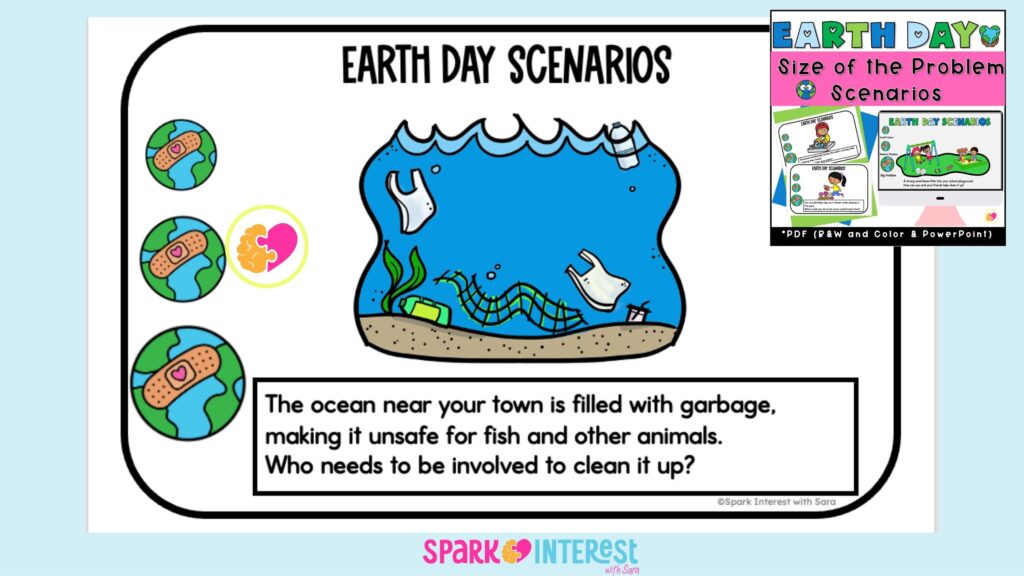
This is also a lovely opportunity to explore environmental responsibility. For example, Earth Day Size of the Problem Scenarios can get children thinking about different environmental situations and their impact.
If you’d like to explore this further, my Big vs Small Problems and Earth Day Size of the Problem Scenarios resources provide ready-to-use situations to get children thinking and talking.
Questions to Ask When Discussing Social Scenarios
One of the easiest ways to get more out of a social scenario is to ask good questions.
Rather than simply asking your students what they think someone should do, try getting curious and exploring the situation from a few different angles.
You don’t need to ask every question, either. Follow the conversation, listen to the ideas being shared and use those responses to guide your next question.
Here are some questions to get you started.
Understanding the situation
First, give your students an opportunity to make sense of what’s happening.
- What’s happening in this scenario?
- What do you think happened before this?
- Who is involved?
- What do you think might happen next?
Exploring feelings and perspectives
Encourage your group to consider how different people might experience the same situation.
- How do you think each person might be feeling?
- Why might they feel that way?
- Do you think everyone feels the same?
- What might the other person be thinking?
Thinking about possibilities and solutions
This is where you can really get curious and encourage your students to explore different ideas.
- What could they do?
- What could they say?
- What else could they try?
- What might happen if they did that?
- Can you think of another way to handle this?
Encouraging empathy and understanding
Help students consider the needs and experiences of others without assuming there’s only one right response.
- What might the other person need?
- How could they show the other person they’ve heard them?
- What might help everyone feel included?
- What could they do if they don’t agree?
Making connections to everyday experiences
Help your students connect the scenario to things they’ve experienced or noticed themselves.
- Have you ever seen something like this happen?
- Have you ever been in a similar situation?
- What did you do?
- Is there something you might try next time?
A little reminder: You don’t need to have all the answers, and neither do your students. Sometimes the most valuable conversations happen when we slow down, ask another question and give everyone the space to explore their own ideas.
You might be surprised by where the conversation takes you!
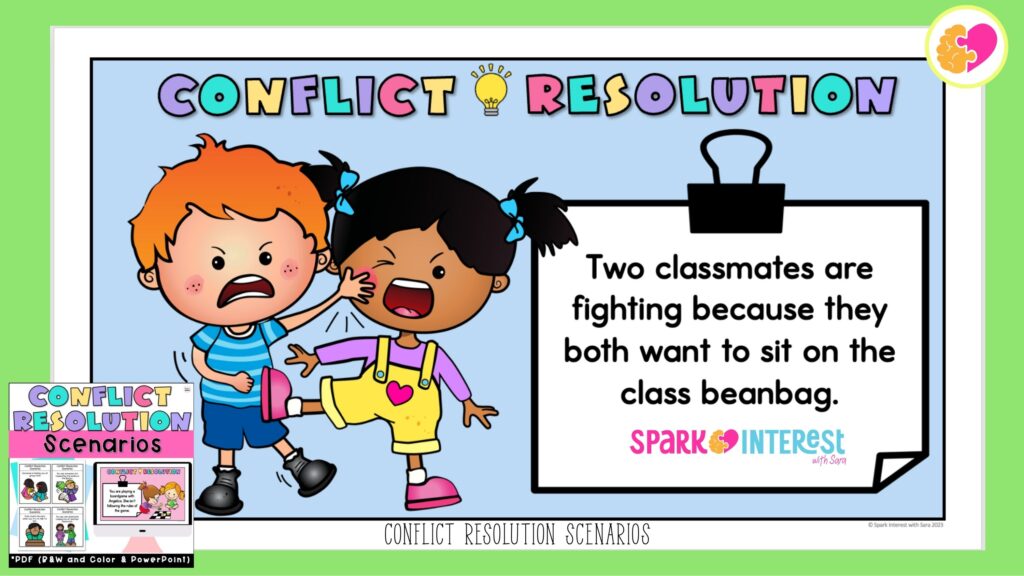
Using familiar, child-friendly situations, this resource helps young learners explore common conflicts they may face in the classroom or on the playground and think about different ways to solve them.
A Few Tips for Getting the Most Out of Social Scenarios
Social scenarios can lead to some really interesting conversations, but a few small things can make the experience even more meaningful for your students.
Here are some things to keep in mind:
- Choose scenarios your students can relate to.
Think about the situations that come up during your preschool day. Sharing resources, joining a game, navigating friendships and working through disagreements are all familiar experiences that can spark meaningful conversations.
2. Give everyone time to think.
Not everyone will have an answer straight away, and that’s okay. Allow some thinking time before inviting students to share their ideas. You could also try think-pair-share to give everyone an opportunity to contribute.
3. Be open to different perspectives.
Your students might come up with ideas you hadn’t considered, or disagree with one another. Rather than rushing to correct them, get curious. Ask follow-up questions and explore their thinking.
4. Don’t turn every scenario into a lesson about the right thing to do.
The aim isn’t to teach children a set of rules or have them repeat what they think adults want to hear. It’s about encouraging them to think for themselves, consider different perspectives and explore possibilities.
5. Let the conversation unfold naturally.
You don’t need to work through every question or reach a particular conclusion. Sometimes a conversation will take an unexpected direction, and that’s part of the learning.
6. Revisit scenarios over time.
You can return to a familiar scenario weeks or even months later and see whether your students have new ideas or perspectives. It’s also a lovely way to build on previous discussions.
Looking for Ready-to-Use Social Scenarios?
Social scenarios are a great way to introduce conversations about different social situations, but they’re also useful for revisiting and reinforcing SEL concepts you’ve already taught.
For example, if you’ve been exploring friendship, kindness, fairness or conflict resolution with your students, you can use scenarios to build on that learning. They give your group opportunities to think through different situations, consider how they might respond and explore how they could put what they’ve learned into practice.
And because every scenario is a little different, you can keep extending those conversations and helping students develop a broader understanding of the concepts you’re exploring together.
Coming up with your own scenarios is always an option, but let’s be honest, sometimes it’s nice to have something ready to go!
I’ve created a range of social scenarios resources for preschool and early childhood educators, covering different areas of social-emotional learning.
Here are a few you might like to explore:
Social Scenarios Problem Solving

If you’re looking for ways to encourage your students to think through everyday challenges, these scenarios provide a starting point for conversations about possible solutions, different perspectives and problem-solving.
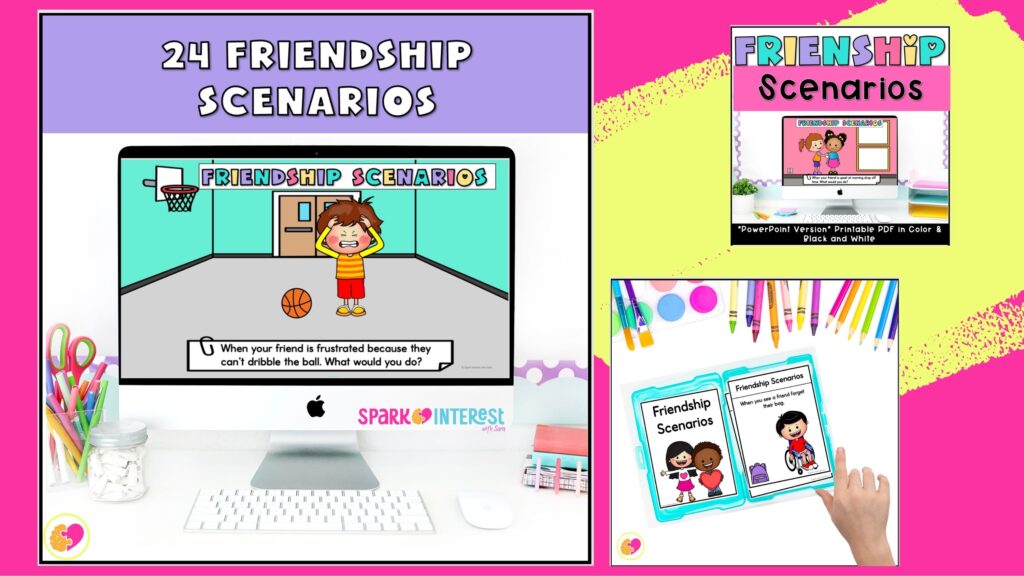
Friendship Scenarios

This friendship resource will be a great addition to your Unit on Developing Friendship Skills.
Explore situations involving friendships, joining play, including others and navigating the ups and downs of playing together.
Fairness Scenarios

What does fair actually mean? These scenarios encourage students to explore situations involving fairness, taking turns, sharing and considering different points of view.
Conflict Resolution Scenarios
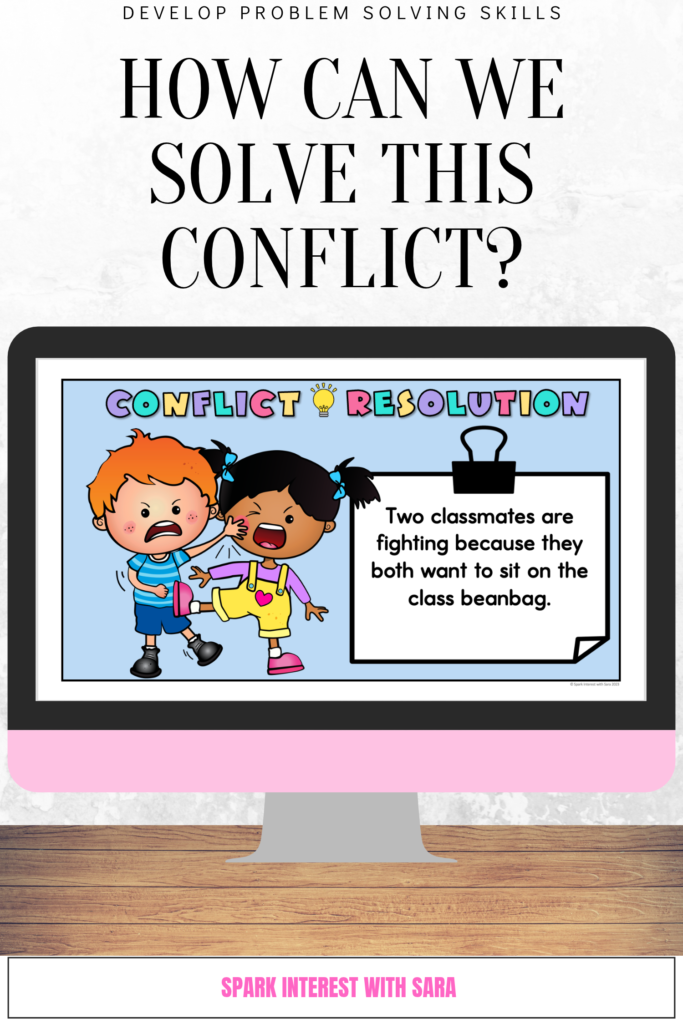
Help your students explore everyday disagreements and think about different ways people can communicate, work through problems and find solutions.
You can also check out my blog post, 40 Conflict Resolution Scenarios for Preschoolers, for more ideas and examples to use in your classroom.
Big vs Small Problems and Earth Day Size of the Problem Scenarios

These resources offer opportunities to explore different types of problems and their impact.
The Big vs Small Problems scenarios encourage children to consider the size of a problem and possible responses, while the Earth Day scenarios introduce environmental situations that get students thinking about the choices we make and how they affect our surroundings.
Final Thoughts on Social Scenarios
Social scenarios are such a simple way to create meaningful conversations and extend your students’ social-emotional learning.
Whether you’re exploring friendship, kindness, fairness or working through everyday disagreements, they give your students opportunities to think things through, share their ideas and consider different perspectives.
And remember, you don’t need to have all the answers. Sometimes the best thing we can do as educators is get curious, ask another question and give our students the space to work things out for themselves.
You might be surprised by what they come up with!
So next time you’re planning a group discussion or looking for a way to revisit an SEL concept you’ve been exploring, why not introduce a social scenario and see where the conversation takes you?
Frequently Asked Questions About Social Scenarios
1. What are social scenarios for preschoolers?
Social scenarios are short, relatable situations based on everyday experiences that children might encounter when playing and interacting with others. They provide opportunities to explore feelings, relationships, problem-solving and different ways of responding to social situations.
2. At what age can you start using social scenarios?
You can introduce simple social scenarios during the preschool years, adapting the language and complexity to suit your students’ developmental stages, interests and experiences. Pictures, puppets and familiar classroom situations can help make discussions accessible.
3. How do you use social scenarios in the classroom?
You can introduce social scenarios during morning meetings, small-group discussions, think-pair-share activities, role play or even as part of your regular SEL program. Use open-ended questions to encourage students to share ideas, consider different perspectives and explore possible solutions.
4. How often should you use social scenarios?
There’s no set rule. You might introduce one during group time each week, use them to reinforce an SEL concept you’re exploring or revisit particular scenarios when similar situations arise in the classroom.
5. What skills do social scenarios help develop?
Social scenarios provide opportunities to practise empathy, communication, problem-solving, emotional awareness, friendship skills, perspective-taking and conflict resolution.
Keep Exploring: More Ideas for Your Preschool SEL Program
Looking for more ideas to support social-emotional learning in your preschool classroom? Here are a few more posts you might enjoy:
How to Teach Preschoolers Conflict Resolution Skills
Explore fun and practical ways to help your students navigate disagreements, communicate their needs and develop strategies for working through problems.
Size of the Problem: 6 Fun Ways to Teach Big vs Little Problems in Preschool
Looking for ways to help preschoolers understand that not all problems are the same size? This post shares six activities to explore big and little problems with your class.
Fair vs Equal: How to Teach This Big Idea to Little Learners
Explore the difference between fair and equal with practical ideas to help your students think about fairness, different needs and perspectives.

